Genrih Kunov
 Germany
- Henryk Kunov: German Historian and Sociologist
- Political Engagement
- World War I and Later Years
- Contributions to Historical and Sociological Studies
- Legacy
Henryk Kunov: German Historian and Sociologist
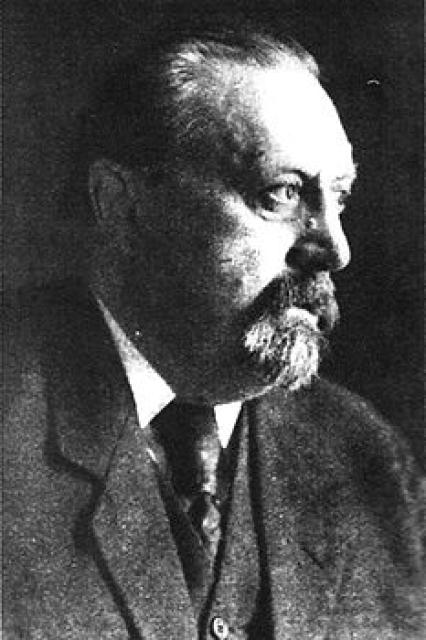
Henryk Kunov was a renowned German historian, sociologist, ethnographer, and publicist. He was also one of the key theorists of German social democracy. Kunov grew up in a modest family of a factory worker. He studied in Hanover and worked as an accountant in a wallpaper factory.
Political Engagement
He joined the social democratic movement and independently studied Marxism, as well as the philosophies of Kant and Hegel. Kunov started contributing to social democratic press and, from 1898, became one of the editors of the social-democratic theoretical journal "Die Neue Zeit" (The New Times), published by Karl Kautsky. At the same time, starting from 1902, he served as the editor of the main organ of the German Social Democrats, the newspaper "Vorwärts" (Forward).
World War I and Later Years
During World War I (1914-1918), Kunov initially opposed military credits but later became a "social chauvinist," defending his homeland. After the war, he held far-right positions within the social democracy. From 1917 to 1923, he replaced the centrist Karl Kautsky as the chief editor of "Die Neue Zeit." From 1919 to 1930, Kunov was a professor at the University of Berlin and served as the director of the Museum of Ethnology from 1919 to 1924.
Contributions to Historical and Sociological Studies
Kunov authored numerous works on the history of primitive society, combining some Marxist positions with theories borrowed from economic ethnography. His work "Theological or Ethnological History of Religion?" (1910) was revised by I. I. Skvortsov-Stepanov and published in Russian as "The Origin of Our God" (1919, new edition 1958). His study on the French Revolution (1908) was translated into Russian as "Class Struggle and Parties in the French Revolution of 1789-1794," published in 1923.
In his later works, Kunov attempted to revise certain Marxist principles. He presented history as a process of gradual social change in which "political revolutions" seem to play an insignificant role. Sociology in Kunov's works was influenced by positivist evolutionary theory combined with economic materialism. His main philosophical work, "Marx's Theory of the Historical Process of Society and the State" (1920-1921), was directed against the doctrine of proletarian revolution and dictatorship of the proletariat. His four-volume study, "History of Economy" (1926-1931), completely overlooked the concept of socio-economic formation.
Legacy
Kunov's posthumously published research on the Inca Empire, "History and Culture of the Inca Empire" (1937), remains highly regarded in the field of ethnography and history. Despite his controversial views later in his career, Kunov's contributions to Marxist theory and his studies on primitive society continue to stimulate academic discussions and debates.