Georg Danzer
 Austria
- Georg Danzer: The Pioneer of Austropop
- Early Life and Musical Beginnings
- Collaborations and Rise to Fame
- Challenges and Comeback
- Final Years and Legacy
Georg Danzer: The Pioneer of Austropop
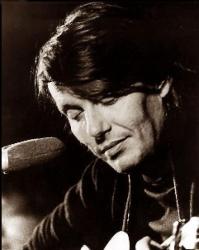
Georg Danzer was an Austrian singer, songwriter, and poet, known as one of the pioneers of Austropop. Despite his contributions to the genre with songs like "Jö schau" and "Hupf in Gatsch," Danzer always refused to consider himself solely responsible for its birth. He established himself as a talented solo performer and also collaborated with the group "Austria3," alongside Wolfgang Ambros and Rainhard Fendrich. Music was just one aspect of Danzer's multifaceted career, which also included translating Spanish books into German and engaging in active social activism, advocating against social inequalities, racism, and social discrimination, while constantly criticizing the bourgeois lifestyle.
Early Life and Musical Beginnings
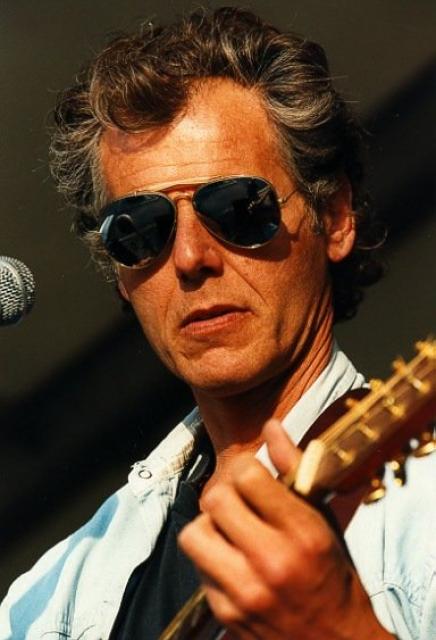
Georg Danzer was born in Vienna into a family of local communists. He did not excel academically during his school years but managed to obtain his diploma. Afterward, he embarked on a hitchhiking journey across Europe, visiting Germany, the Netherlands, and Italy. In the autumn of 1966, he attempted to enter the Vienna Academy of Dramatic Arts but was unsuccessful. He then pursued studies in psychology and philosophy. Danzer began writing and performing music in 1967, after returning from another hitchhiking adventure to Hamburg, Sweden, and Crete. His first single, "Vera," received some airplay on Austrian radio but did not lead to a recording contract.

Collaborations and Rise to Fame
In 1970, Danzer caught the attention of Eva-Maria Kaiser, editor of "Hitradio Ö3." Kaiser recognized his extraordinary talent as a poet-songwriter. Over the next three years, Danzer wrote lyrics for renowned performers such as Marianne Mendt, Margot Werner, Erika Pluhar, André Heller, Wolfgang Ambros, and Wilfried. During this time, singing in the Viennese dialect and local slang became popular, and Danzer's lyrics resonated with the listeners. In 1973, he self-financed the release of his album "Honigmond," which unfortunately did not sell well. However, he remained dedicated to his music.

The turning point in Danzer's career came in 1975 with the release of the comical song "Jö schau." It quickly climbed to the top of the Austrian charts and remained there for 20 weeks. On October 14, 1975, Danzer married his longtime girlfriend Dagmara, with whom he had been in a relationship for seven years. They welcomed their daughter Daniela in the following year. In 1976, Danzer signed a contract with the major record company Polydor.
Challenges and Comeback
In 1979, Danzer embarked on a successful tour, performing 32 concerts that were all sold out. He continued releasing new albums, and his talent as a serious and mature performer began to emerge. In 1983, Danzer became one of the first artists in Germany to release an album on compact disc. However, his career began to decline in the mid-1980s. He dissolved his band, went through a divorce, and his contract with Polydor ended. He took a break from music but made a triumphant comeback in the early 1990s.
Final Years and Legacy
In September 2006, Danzer revealed to his listeners that he was battling lung cancer. He was forced to cancel two planned concerts due to his illness. Unfortunately, the cancer eventually claimed his life, and he passed away on June 21, 2007. Georg Danzer left behind a rich musical legacy and a lasting impact on the Austrian music scene. His contributions as a singer, songwriter, and social activist continue to inspire and resonate with audiences.