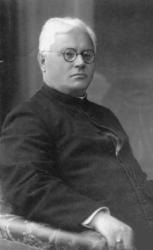
Georg Herwegh
 Germany
- Early Life and Education
- Revolutionary Poetry
- Collaboration with Marx and Engels
- Revolutionary Involvement
- Personal Life
Early Life and Education
Georg Herwegh was born into a wealthy tavern-owning family in Württemberg, Germany. Despite being sickly and afflicted with St. Vitus' Dance as a child, he was sent to boarding school with relatives and later enrolled in the Maulbronn Seminary at age 15.
Revolutionary Poetry
Herwegh's call for action in his collection "Poems of a Living Man" (1841-1843) resonated deeply with the era. His demand for spiritual and political freedom and his advocacy for political activism, as seen in his poem "The Party" (1842), earned him immense popularity. Herwegh drew inspiration from literary figures such as Platen, Hölderlin, Schiller, Shelley, and Béranger.
Collaboration with Marx and Engels
Herwegh collaborated with Karl Marx and Friedrich Engels, contributing to their "Rheinische Zeitung" and "Deutsch-Französische Jahrbücher." However, he remained steadfast in his individualistic and anarchist views, which led to a parting of ways with Marx.
Revolutionary Involvement
Herwegh's later poetry had a profound impact on social democratic and socialist poetry, influencing the works of poets like Erich Weinert. In 1845, he moved to Paris and actively participated in the German Revolution of 1848.
Personal Life
Herwegh's personal life was equally eventful. He married Emma Sigmund, the daughter of a wealthy silk merchant and royal supplier. His reputation as a renowned ladies' man attracted some of Europe's most alluring women, including Madame d'Agoult and Natalie Herzen, the wife of Alexander Herzen. His unsuccessful attempt to duel Herzen over his affair with Natalie Herzen highlights the intensity of Herwegh's character.