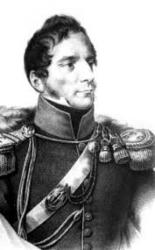
Juozas Tumas
 Lithuania
- Biography of Juozas Tumas
- Early Career and National Activism
- Return to Lithuania and Literary Achievements
Biography of Juozas Tumas
Early Life and EducationJuozas Tumas, also known by his literary pseudonym Juozas Vaižgantas, was a Lithuanian writer, playwright, critic, journalist, literary scholar, churchman, and public figure. He was born into a peasant family in eastern Lithuania, near the town of Svedasai. Tumas studied at the Dvinsk Real Gymnasium (1881-1888) in what is now Daugavpils, Latvia. During this time, he was influenced by Russian classical literature, including the works of Leo Tolstoy, Ivan Turgenev, and Nikolai Nekrasov, as well as illegal Lithuanian periodicals.
Early Career and National Activism
From 1888 to 1893, Tumas studied at the Kaunas Seminary in Lithuania. After graduating, he was appointed as a vicar of the Catholic parish in Mitau (now Jelgava, Latvia). He became involved in national public activities and from 1896 to 1904, he served as the editor of the clerical newspaper "Tėvynės sargas" ("Homeland's Guardian"). However, his activities were met with disapproval from the church authorities, and he was frequently transferred to different parishes.
In 1906-1911, Tumas lived in Vilnius and worked for the editorial offices of the newspapers "Vilniaus žinios" ("Vilnius News") and "Viltis" ("Hope"), and later for "Ryto garsas" ("Morning Voice") in 1914. He traveled to the United States in 1911 and in 1914, he was transferred to Riga, where he edited the newspaper "Rygos garsas" ("Voice of Riga"). During World War I in 1915, he was involved in the activities of a committee that provided assistance to Lithuanian refugees in Petrograd. He co-founded the Party of National Progress and participated in representative meetings of Lithuanians in Petrograd and Stockholm.
Return to Lithuania and Literary Achievements
In 1918, Tumas returned to Lithuania and participated in the work of a committee providing assistance to refugees in Vilnius. He published the newspaper "Lietuvos aidas" ("Echo of Lithuania") and began publishing the newspaper "Nepriklausoma Lietuva" ("Independent Lithuania") in 1919. In 1920, he moved to Kaunas, where he was appointed rector of the Church of Vytautas the Great until 1932. Simultaneously, he worked at the Faculty of Humanities of the Lithuanian University in Kaunas (which was renamed Vytautas Magnus University in 1930), where he lectured on the history of Lithuanian literature from 1922 to 1929. In 1929, he was awarded the title of honorary doctor.
In addition to his literary and journalistic works, Tumas was involved in numerous political, social, and cultural organizations. He traveled to Italy in 1931 and Sweden in 1932. From 1932 to 1933, he served as the chairman of the Society of Lithuanian Writers. Tumas was buried in the Church of Vytautas the Great in Kaunas. His former apartment on Aleksotas Street in Kaunas, where he lived from 1920 to 1933, now houses a memorial museum, a branch of the Mykolas Biržiška Literature Museum.
Juozas Tumas was one of the most prolific and versatile Lithuanian writers, known for his mastery of prose. He began writing poetry and prose while still in gymnasium. While studying at the seminary, he started collaborating in clerical publications. During the early stages of his career, he mainly wrote short sketches, small dramatic and prose works. These patriotic and moralizing works, written in vivid and figurative language, were included in collections such as "Pictures" (1902), "Scenic Pictures," and "Allegorical Pictures" (1906-1916). His cycle of stories about the sufferings and hardships of people during the war was combined into "War Pictures" (1914-1917).
Tumas-Vaižgantas gained prominence in the 1920s when he turned to writing novels such as "Uncle and Aunt" (1921, his most popular work), "Degenerate," "The Mute" (1930), "The Samogitian Robinson" (1932), and the novel "The Cancer of the Family" (1927-1929) about the life of the Koven intelligentsia in the last decade of the 19th century. His epic work "Glimmers. Pictures of the Struggle for Culture" (also translated as "Enlightenments"; 1918-1920) represents a kind of epic of the Lithuanian national revival and the life of Lithuania in the years before the 1905 revolution. The novel, structured as a series of independent stories united by the theme of Lithuania's national life, established Tumas-Vaižgantas as one of the leading stylists in Lithuanian prose. His rich language, derived from everyday life and customs, his ability to capture the characteristic features of the phenomena and way of life described, and his wide gallery of vivid portraits contributed to his success.
Tumas also published biographical sketches of Mykolas Biržiška, Antanas Baranauskas, Vincas Kudirka, and articles about A. Vėnecianas, Jurgis Vaižgantas, Lazdinas Peleda, and many other Lithuanian writers. He carefully collected documentary and factual material for his historical-literary works, which remain important sources of information for researchers of Lithuanian literature.