George Cehanovsky
 USA
USA- George Cehanovsky: American Baritone and Russian Language Teacher
- Early Life and Career in Russia
- Immigration to the United States
- Career at the Metropolitan Opera
- Later Life and Legacy
George Cehanovsky: American Baritone and Russian Language Teacher
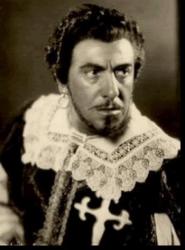
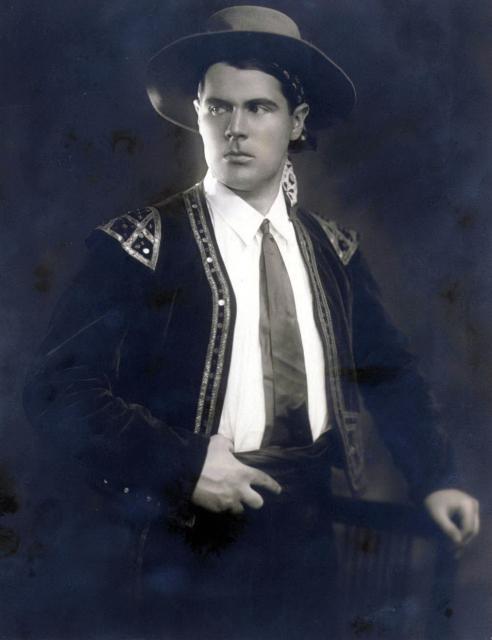
George Cehanovsky was an American baritone and Russian language teacher who had a close collaboration with the Metropolitan Opera in New York City for six decades. He passed away in 1986, holding the record for the most performances at the MET - a total of 2394 appearances on the theater stage. Only the tenor Charles Anthony and conductor James Levine have surpassed his record since then.
Early Life and Career in Russia
Georgy Cehanovsky was born on April 14, 1892, in Saint Petersburg, Russia, into a noble family. He studied at the Nikolayev Naval Academy and served as an officer in the Russian Imperial Fleet during World War I. When the revolution occurred in 1917, he resigned from the Navy and began studying singing under the guidance of his mother, Vera Cehanovska, a violinist, pianist, and vocal coach.
Cehanovsky made his professional debut as an opera singer in 1920 in Petrograd (formerly Saint Petersburg) and spent the next few years performing with various small opera companies in the city. In 1922, realizing that returning to their previous life was unlikely, Vera left Soviet Russia and settled in Istanbul, Turkey. Later that same year, her son joined her and started performing with a small opera company in Turkey.
Immigration to the United States
A performance at the American Red Cross in the fall of 1922 led Cehanovsky to meet the wife of an American ambassador in Turkey. They became friends, and the ambassador's wife arranged visas to the United States for Cehanovsky and his mother. It is unclear which ambassador's wife helped them since the United States had severed diplomatic relations with Turkey in 1917 and only restored them ten years later in 1927. Nevertheless, Cehanovsky and his mother arrived in New York City on December 6, 1922.
Trying to establish themselves in the United States, they reached out to one of Vera's former students, the lyric-coloratura soprano Thalia Sabanieeva, who was a leading artist at the Metropolitan Opera at that time. Sabanieeva assisted Cehanovsky in auditioning for several opera companies, and he soon found employment with the touring company "San Carlo Opera Company," led by American director and producer Fortune Gallo. Cehanovsky sang with Gallo from 1923 to 1926.
Career at the Metropolitan Opera
In 1926, Cehanovsky auditioned for Artur Bodanzky, the chief conductor of the German repertoire at the Metropolitan Opera, and was given the role of a baritone comprimario (a performer of secondary roles) after only two measures. His debut at the MET took place on November 13, 1926, in the role of the baker Kothner in Wagner's "Die Meistersinger von Nürnberg." Interestingly, on that evening, he shared the stage with his future wife, German soprano Elisabeth Rethberg, although they married almost 30 years later.
Cehanovsky continued to perform at the Metropolitan Opera for the next 40 years, with the majority of his 97 roles being secondary parts such as Angelotti in "Tosca," Baron Douphol in "La traviata," Biterolf in "Tannhäuser," and many others. He participated in several world premieres, including Deems Taylor's operas "The King's Henchman" in 1927 and "Peter Ibbetson" in 1931, Howard Hanson's "Merry Mount" in 1934, Walter Damrosch's "The Man Without a Country" in 1937, and Samuel Barber's "Vanessa" in 1958.
Later Life and Legacy
Cehanovsky's final performance at the old Metropolitan Opera House took place on a farewell gala concert on April 16, 1966. However, even after retiring, he continued working at the MET, coaching singers on Russian repertoire and starting with "Boris Godunov" in 1976. He remained involved in every Russian production until the end of his life. His last work as a vocal coach was the opera "Eugene Onegin" in 1985.
George Cehanovsky passed away at the age of 93 on March 25, 1986. His remarkable career and dedication to the Metropolitan Opera left an indelible mark on the world of opera, and his extensive repertoire and commitment to Russian opera continue to be celebrated and remembered.