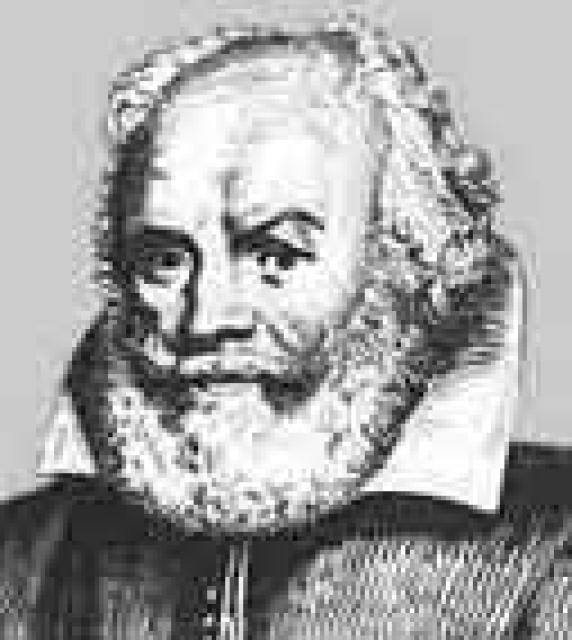
George Chapman
 Great Britain
- Early Life and Education
- Travels and Influences
- Literary Career
- Imprisonment and Release
- Philosophical Insights
- Dramatist for Stage and Court
- Historical Tragedies
- Mastery of Translation
Early Life and Education
George Chapman (c. 1559-1634) was an English poet, playwright, and translator known for his works on Homer and French history. Born in Hitchin, Devonshire, he studied classical languages and literature at Oxford University.
Travels and Influences
Chapman's extensive travels in Europe, especially in France, influenced his writing. He became fluent in French and was deeply immersed in its culture. In London, he joined a circle of scholars and poets led by Sir Walter Raleigh.
Literary Career
Early Poetry and Homer's IliadIn 1598, Chapman's fame as a playwright soared. He also published the first seven books of his translation of Homer's Iliad, marking his debut as a translator.
Imprisonment and Release
In 1600, Chapman was imprisoned for debt. He penned a petition to the Lord Chancellor, securing his release.
Philosophical Insights
Chapman's poetry and plays were characterized by introspection and philosophical depth. His works were infused with Renaissance scholarship, though his true brilliance shone through in his elevated sentiments and patriotic passages.
Dramatist for Stage and Court
Chapman began writing plays in the late 1590s. His comedies, such as "The Blind Beggar from Alexandria" and "An Humorous Day's Mirth," were intended for outdoor theaters. He also penned comedies for the Children of the Chapel Royal, including "May-Day" and "The Gentleman Usher."
Historical Tragedies
Chapman's most renowned tragedies were based on episodes from French history. "Bussy d'Ambois" (1607) launched a series of plays, including "The Conspiracy and Tragedy of Charles Duke of Byron" and "The Revenge of Bussy d'Ambois."
Mastery of Translation
Chapman's enduring legacy lies in his translations of Homer's Iliad and Odyssey. Though not a trained philologist, he was a meticulous reader of Homer. He employed a seven-foot iambic line for the Iliad and a heroic stanza for the Odyssey, combining fidelity to the original with his own interpretations.



