George E. Smith
- Early life and education
- Bell Laboratories
- The invention of the CCD
- Recognition and later years
- Personal life and legacy
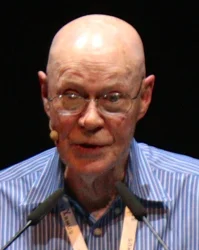
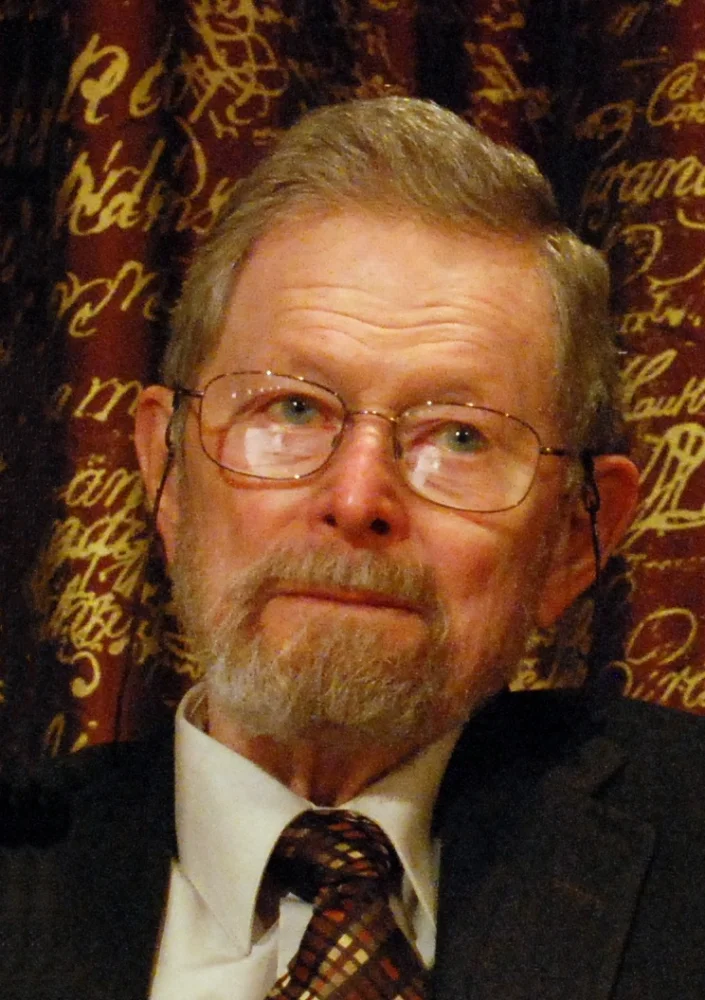
George Elwood Smith was an American physicist whose work helped turn light into information that computers could store, process, and transmit. The charge-coupled device (CCD), which he co-invented with Willard Boyle at Bell Laboratories, became a foundation of digital imaging, from scientific instruments to cameras used around the world. Smith spent nearly three decades at Bell Labs, where broad curiosity and practical engineering met in a culture of collaborative research.
Early life and education
Smith was born on May 10, 1930, in White Plains, New York. After serving four years in the U.S. Navy, he studied physics at the University of Pennsylvania, earning his bachelor’s degree in 1955. He continued at the University of Chicago, receiving a master’s degree in 1956 and a doctorate in physics in 1959. His graduate research focused on the electronic properties of solids, a subject that would shape his career in semiconductor physics.
Bell Laboratories
In 1959, Smith joined Bell Telephone Laboratories in Murray Hill, New Jersey. He investigated the electronic structure of solids, semimetals, thermoelectric materials, and low-temperature electronic devices, then moved toward the development of new semiconductor concepts. From 1964, he led Bell Labs’ Device Concepts Group, working across areas that included lasers and solid-state devices. His interests ranged from fundamental physics to technologies that might become useful in communications and electronics.
The invention of the CCD
In 1969, Smith and Boyle were asked to consider how semiconductor technology might be used to create a memory device. During a focused discussion at Bell Labs, the two physicists developed the central idea for the charge-coupled device. The design used an array of semiconductor regions to hold electrical charge and pass it from one region to the next. The concept was compact and elegant: information could be stored and moved across a chip through controlled electrical signals.
The CCD’s potential soon reached beyond memory. Its ability to respond to light made it useful as an image sensor, converting incoming light into electrical signals that could be read and analyzed. Researchers at Bell Labs, including Michael Tompsett and colleagues, developed the technology further for imaging applications. CCD sensors went on to transform photography and scientific observation, helping astronomers detect faint objects and enabling compact electronic cameras and other imaging systems.
Smith and Boyle published their work in 1970. Smith later recounted the invention’s origins in a Nobel lecture, describing how the scientific environment at Bell Labs and the technological challenges of the late 1960s came together in the device’s creation.
Recognition and later years
The CCD brought Smith and Boyle major professional honors, including the 1973 Stuart Ballantine Medal, the 1974 Morris N. Liebmann Memorial Award, and the 2006 Charles Stark Draper Prize. In 2009, they shared half of the Nobel Prize in Physics; the other half went to Charles K. Kao. The Nobel committee recognized Boyle and Smith for the invention of an imaging semiconductor circuit, the CCD sensor.
Smith remained at Bell Labs until retiring in 1986. He continued to be associated with the history and impact of the device, reflecting on how a research idea conceived for one purpose grew into a technology with applications its inventors could not fully foresee.
Personal life and legacy
Outside the laboratory, Smith was an enthusiastic sailor. He and his family sailed on weekends after he joined Bell Labs, and he later undertook an extended voyage around the world. Sailing remained a lasting passion and a source of adventure alongside his scientific career.
Smith died at his home in Barnegat Township, New Jersey, on May 28, 2025, at the age of 95. His invention with Boyle helped change how people record images and how scientists gather evidence about the natural world. The CCD’s reach reflects both the power of a simple physical insight and the collaborative work that carried it from a laboratory concept into everyday life.