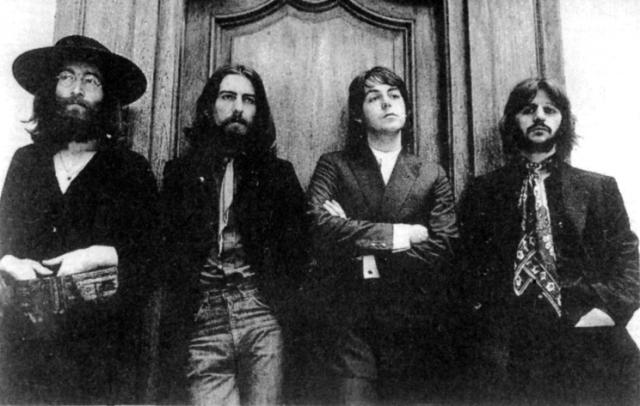
George Harrison
 USA
USA- George Harrison: The Quiet Beatle
- Early Life and Musical Journey
- The Influence of Indian Philosophy and Music
- Post-Beatles Career
George Harrison: The Quiet Beatle
George Harrison, often referred to as the "Quiet Beatle," was a musician and a member of the iconic band, The Beatles. While John Lennon was seen as a cynical intellectual, Paul McCartney as a serious romantic, and Ringo Starr as unflappable, Harrison's quiet demeanor and talent spoke for itself.
Early Life and Musical Journey
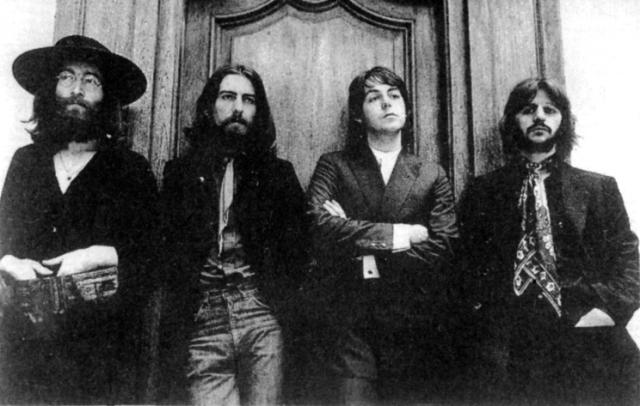
Harrison was the only member of The Beatles who had a carefree childhood. He grew up in a loving and nurturing family environment, unlike his bandmates who experienced divorces and the loss of loved ones. Raised in the Wavertree area of Liverpool, near the homes of John and Paul, Harrison's early life provided him with some outlet for his teenage aggression.
At the age of 13, Harrison found his passion for music and began playing the guitar. He became drawn to folk music, played on acoustic guitars, bass strings, and washboards. His college roommate, Paul McCartney, shared his enthusiasm for this style and they bonded over their love for American rock and roll. McCartney managed to join a local band called the Quarry Men, which also included their mutual friend, John Lennon. In 1958, on McCartney's recommendation, Harrison joined the band as well. Inspired by the success of the group, he quit his studies to pursue his rock and roll dreams, working as an electrician's assistant for a while to make ends meet. Despite being significantly younger than the other members, Harrison proved himself to be a skilled and innovative guitarist. He continued to refine and diversify his playing style, drawing inspiration from Duane Eddy, Chet Atkins, Buddy Holly, Eddie Cochran, and classical guitarist Andr?s Segovia. By 1962, when the Quarry Men had transformed into The Beatles, Harrison had matured into a lead guitarist.
The Influence of Indian Philosophy and Music
In the film series "Help!" (1965), Harrison was seen with a unique stringed instrument initially called a sitar. This "instrumental" expression showcased his interest in Indian philosophy and eventually led to his conversion to Hinduism. Harrison learned to play the sitar under the guidance of renowned Indian musician Ravi Shankar and subsequently embarked on a trip to India to deepen his understanding of Eastern philosophy. This journey and his relationships with Shankar and spiritual leader Maharishi Mahesh Yogi sparked a spiritual awakening in Harrison. He developed a new outlook on life and found inner peace and tranquility. This period of enlightenment was also marked by his experimentation with drugs, including LSD, as a means of exploring the mystical and the world. These experiences found their way into the album "Sgt. Pepper's Lonely Hearts Club Band," which became a cultural phenomenon.
Post-Beatles Career
By the time Paul McCartney announced his departure from The Beatles in 1970, Harrison had already been involved in separate creative endeavors for two years. His most significant achievement during this time was arranging Indian instrumental music for the unreleased film "Wonderwall." The soundtrack, titled "Wonderwall Music," inspired the British band Oasis to create their hit song "Wonderwall." Although Harrison's songwriting contributions were often overshadowed by Lennon and McCartney, songs like "Something," "While My Guitar Gently Weeps," and "Here Comes the Sun" showcased his notable talent. The end of The Beatles marked a creative rebirth for Harrison. He delved into recording (establishing Dark Horse Records in 1974) and collaborated with other musicians and artists, particularly Bob Dylan and Eric Clapton. Harrison, along with Phil Spector, formed the first post-Beatles solo project called "All Things Must Pass" (1970). This album allowed Harrison to showcase his immense yet previously untapped talents as a lyricist, musician, composer, and producer.
Throughout his career, Harrison took on various projects with confidence. In 1978, he founded the production company HandMade Films, which released acclaimed movies like "Monty Python's Life of Brian" and "Time Bandits." He also had small acting roles in films, most notably in "The Rutles: All You Need Is Cash" (1978), a comedic take on Beatles mythology. He produced and played as a guest guitarist on other musicians' projects, wrote his autobiography titled "I Me Mine," and formed the supergroup "Traveling Wilburys" with Bob Dylan, Tom Petty, Jeff Lynne, and later, Roy Orbison. In recognition of his contributions to music, Harrison received the Billboard's Century Award in 1992 and won six Grammy Awards. He also shared an Academy Award with The Beatles.
Harrison's final project with his fellow ex-Beatles, Paul McCartney and Ringo Starr, was the creation of "The Beatles Anthology," a retrospective of the band's work through a documentary TV series and three volumes of previously unreleased recordings. His subsequent project involved collaborating with Ravi Shankar on an album. George Harrison's musical legacy continues to inspire and resonate with millions of fans around the world.


