George III
 Great Britain
- Biography of George III
- The Reign of George III
- Early Life and Accession to the Throne
- America, French Revolution, and Napoleonic Wars
- The Later Years and Legacy
Biography of George III
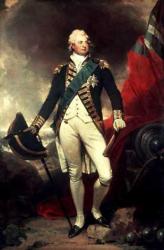
George III, born in 1738, was the King of Great Britain and Elector (later King) of Hanover from 1760 until his death in 1820. He belonged to the Hanoverian dynasty. His long reign, lasting nearly 60 years, was marked by significant revolutionary events around the world. These events included the American colonies separating from British rule and forming the United States, the French Revolution, and the political and armed conflict between England and France, which culminated in the Napoleonic Wars.
The Reign of George III
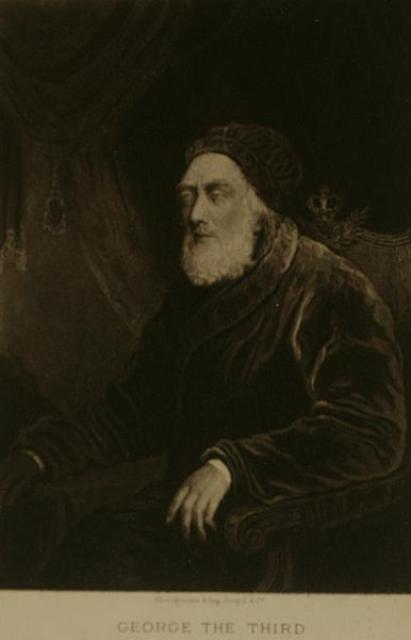
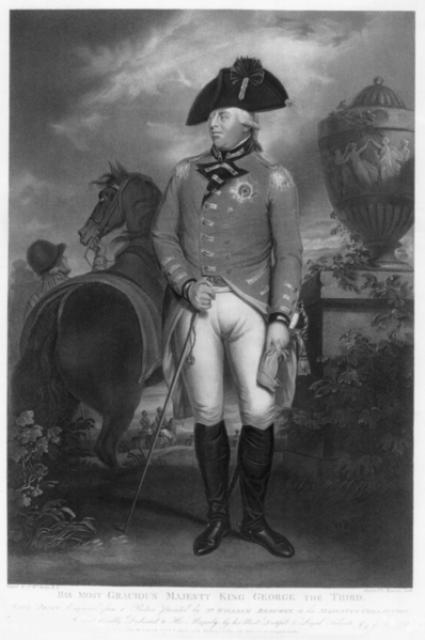
George III is also remembered as a victim of severe mental illness, which led to the establishment of a regency over him in 1811. In 1801, the country officially changed its name from the Kingdom of Great Britain to the United Kingdom. In the same year, George III renounced the formal title of "King of France," which had been used by all English and later British monarchs since the Hundred Years' War, as a temporary normalization of relations with Republican France.
Early Life and Accession to the Throne
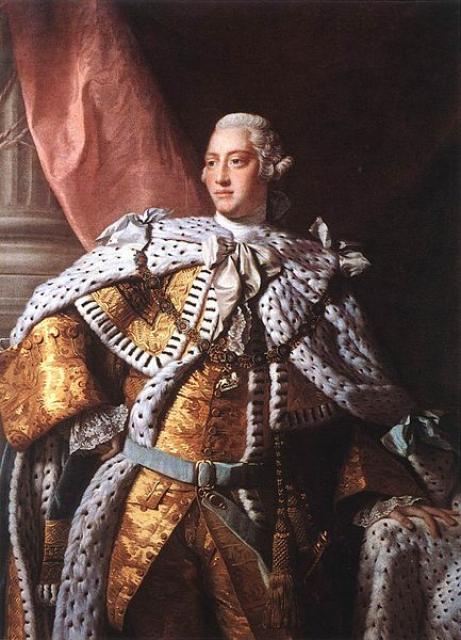
George III was the grandson of George II and the eldest son of Frederick Lewis, Prince of Wales, who died in 1751. At the age of 12, George became the Prince of Wales, and upon the death of his grandfather in 1760, he ascended to the throne. He was the first monarch of the Hanoverian dynasty to be born in Great Britain, and unlike his father, grandfather, and great-grandfather, English was his native language. He had never visited Germany.
Under the guidance of Lord Bute, George III, who was raised with anti-Whig principles, immediately upon his accession to the throne in 1760, sought to break the power of the Whig party. With the help of his "king's friends," Pitt was removed from power in 1761, and the results of his policies were undone by the Treaty of Paris in 1763. However, the incompetence of Lord Bute delayed the triumph of Toryism, and George was forced to allow the Whigs back into power with the Rockingham ministry in 1766.
Finally, Pitt, who was elevated to the House of Lords as Earl of Chatham and broke ties with the Whigs, agreed to come to the king's aid. However, his nervous disorder soon forced him to retire, and the Duke of Grafton, who followed a policy of weakening parties and strengthening the power of the crown, took over the government. In 1770, George, who had not yet lost his popularity, appointed Lord North as prime minister, who became a compliant tool in the hands of the king.
America, French Revolution, and Napoleonic Wars
George's policy of repression towards the American colonists, popular in England until the surrender of Burgoyne at Saratoga and France's intervention in 1778, began to face resistance. North wanted to resign in favor of Lord Chatham, but George did not want to "wear the crown in chains." Unrest grew in society, failures followed in America, and mass dissatisfaction found expression in the Gordon Riots in 1780.
In 1782, North resigned. Once again, the king fell under the despised rule of the Whigs. During the short second Rockingham ministry, he had to agree to the recognition of American independence. Although he found Lord Shelburne more conciliatory, the coalition of Fox and North, formed in 1783, took power with the clear intention of breaking the royal power. George decided to appeal to the nation and, by unconstitutionally using his personal influence in the House of Lords, succeeded in rejecting Fox's East India Bill. The ministers resigned, and after Pitt the Younger, the new Prime Minister, courageously fought against the majority in the House of Commons, Parliament was dissolved in 1784. The elections confirmed the complete victory of the crown over the Whig oligarchy.
The period that followed saw significant material progress, with Pitt's excellent administration winning the crown great popularity. In 1789, the king suffered from a mental disorder but soon recovered. The outbreak of the French Revolution scared even a significant part of the dissatisfied Whigs, leading them to support the monarchy. With the approval of the upper classes, the king and his ministers joined the struggle against France, becoming part of the European coalition.
The burden placed on the nation by the war quickly made it very unpopular, and along with it, the king. Nevertheless, the war continued. In Ireland, a rebellion broke out, which Pitt wanted to suppress by granting Catholic emancipation to officers. However, the king refused to consent to such a measure, citing it as a violation of his coronation oath, and, faced with the minister's firm determination, was forced to accept his resignation in March 1801. George fell into madness for the second time but soon recovered.
Pitt's successor, Addington, concluded the Treaty of Amiens in March 1802, but war was declared again in May 1803. During active preparations to repel the French, the king once again became a victim of his madness. Addington's incompetence became tiresome to both Parliament and the people, who demanded the return of Pitt to power. Talks began, and although Pitt wanted to form a broad-based ministry, the king refused to include Fox, whom he personally disliked. As a result, a purely Tory government was formed. The struggle against Napoleon continued with little success.
The Later Years and Legacy
When Pitt died in 1806, the king, against his own wishes, was forced to call upon Fox and Grenville to lead the "Ministry of All Talents." Grenville, weakened by Fox's death, attempted to reintroduce modest measures for the emancipation of Catholics, but the king demanded that the ministry abandon the bill. The ministers obeyed but did not give up the right to raise the issue again under more favorable conditions. They were subsequently dismissed. The Duke of Portland's ministry, with Perceval as its de facto leader, took their place.
The abnormal state of society was once again expressed in the approval by the electorate of the king's unconstitutional actions in 1807. Despite a series of mistakes and failures in foreign policy, the ministry was not overthrown because it had a significant majority on its side. Later, thanks to Wellington's successful actions in Spain, its position became even stronger. In 1811, the king fell into a hopeless madness and blindness, and the country came under the regency of his eldest son, George, Prince of Wales.
George III passed away eight years later, at the age of 82, without ever knowing that he had become the King of Hanover in 1814 or about the death of his wife in 1818. He was survived by his large family, as he and Charlotte had 15 children - 9 sons and 6 daughters. George III is remembered as one of the most significant figures in British history and for his enduring legacy as a monarch during a period of great change and turmoil.