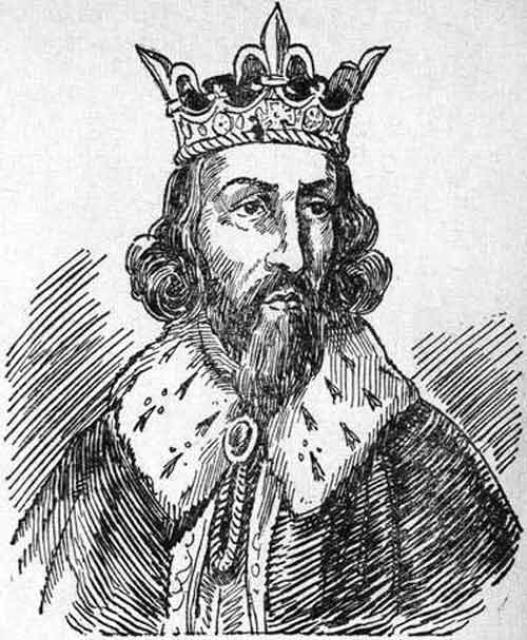
Alfred the Great
 Great Britain
- Alfred the Great: King of Wessex and Defeater of the Vikings
- Accession to the Throne
- Invasions and Resistance
- The Battle of Edington
- Legacy
Alfred the Great: King of Wessex and Defeater of the Vikings
Early Life and EducationAlfred the Great was born in the royal estate of Wanating, Berkshire, in 849 AD. He was the youngest son of King Ethelwulf and Osburga. Despite his frail health as a child, Alfred possessed a strong spirit and an unyielding character. He engaged in vigorous physical activities such as hunting and military exercises to fortify himself.
Alfred's education was a testament to his zeal for knowledge. As a boy, he accompanied his father to Rome in 853, where Pope Leo IV anointed him as the future king of Wessex. His upbringing at the papal court honed his command of languages and acquaintance with classical literature.
Accession to the Throne
In 871 AD, upon the death of his older brother Ethelred I, Alfred ascended to the throne of Wessex. His early reign was marked by a lack of popular support. Alfred's strict adherence to Roman principles of absolutism and his lack of respect for the Witan's traditional authority alienated the Saxons.
Invasions and Resistance
The reign of Alfred the Great was punctuated by repeated invasions from the Vikings. In 871 AD, the Danes captured and sacked London. After a series of defeats, Alfred negotiated a peace treaty with the Vikings, paying them tribute in exchange for a period of respite.
During this truce, Alfred embarked on a period of strategic preparations. Recognizing the Vikings' reliance on naval power, he ordered the construction of a large fleet of warships. By 875 AD, he had amassed a formidable force that would later prove pivotal in his defense of Wessex.
The Battle of Edington
In 878 AD, the Vikings launched a major invasion into Wessex. Alfred rallied his forces and met the invaders at the Battle of Edington. The conflict was a turning point in the war, as Alfred's fleet prevented the Vikings from receiving reinforcements. The Saxons emerged victorious, and the Vikings eventually agreed to the Treaty of Wedmore, which established a boundary between Wessex and the Viking-controlled lands.
Legacy
King Alfred's reign is synonymous with the defense of England from Viking invasions and the rebirth of Anglo-Saxon culture. He was a patron of the arts and learning, founding monasteries and promoting education. He also established a system of laws and governance that laid the foundation for future English institutions.
Alfred the Great's legacy as a warrior, scholar, and statesman continues to inspire generations of Britons. His achievements in uniting England, defeating the Vikings, and establishing a golden age of learning earned him the epithet "Great" and cemented his place as one of England's most revered monarchs.


