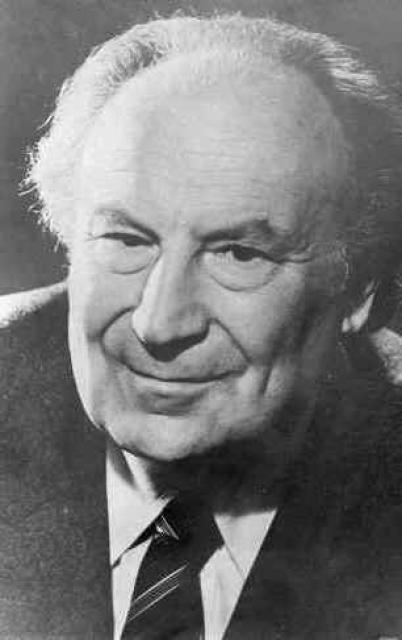
George Kunitsin
 Russia
- Early Life and Military Service
- Academic Career and Political Involvement
- Controversial Scholarship and Dismissal from Doctoral Defense
- Conflict with "Literary Russia" Editor
- Later Years and Legacy
Early Life and Military Service
Georgy Ivanovich Kunitsyn was born on April 22, 1922, in the village of Kunitsyno, Irkutsk Oblast. After graduating from the Chernigov Military Engineering School in 1942, he served as a sapper on the front lines during World War II. On September 30, 1944, he was severely injured during the storming of the Dukla Pass.
Academic Career and Political Involvement
After the war, Kunitsyn pursued higher education, graduating from the history faculty of the Tambov Pedagogical Institute in 1951 and the Academy of Social Sciences under the Central Committee of the Communist Party of the Soviet Union (KPSS) in 1961. In 1961, he earned his PhD in philology.
From 1961 to 1966, Kunitsyn worked in the Central Committee of the KPSS, rising to the position of First Deputy Head of the Culture Department. Due to disagreements with his superiors, he was transferred to the "Pravda" newspaper in 1961 and later left for the Institute of Art History in 1963.
Controversial Scholarship and Dismissal from Doctoral Defense
Kunitsyn's work often sparked controversy and faced resistance from the authorities. On May 16, 1968, the Academic Council of the Institute of World Literature voted against his doctoral dissertation, "Art and Politics." He eventually became Doctor of Philosophy in 1971.
Conflict with "Literary Russia" Editor
In 1988, Kunitsyn published the controversial article "Has the Time Come?" in "Literary Russia." He argued for an honest examination of complex Russian history, including the genocide against the peasantry and the emergence of a new type of serfdom and servitude in contemporary literature. The article ignited a conflict between the newspaper's editor, Mikhail Kolosov, and Yuri Bondarev, ultimately leading to Kolosov's dismissal.
Later Years and Legacy
Kunitsyn spent his later years teaching at the Literary Institute. After his death on October 6, 1996, his letters to Alexander Yakovlev, "the Architect of Perestroika," were posthumously published in "Literary Russia" from 1996 to 1997.


