George Moore
 Great Britain
- George Moore: English Philosopher and Influential Thinker
- Contributions to Philosophy
- Ethics and Moral Intuition
- Theory of Knowledge and Realism
- Method of Philosophy and Language Analysis
George Moore: English Philosopher and Influential Thinker
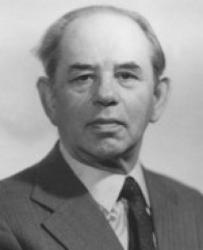
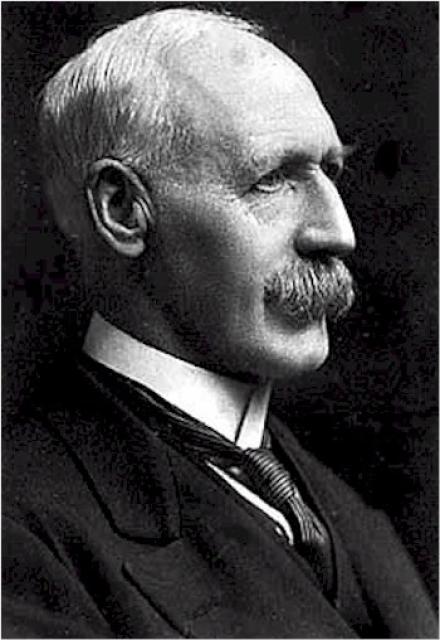
George Edward Moore, an English philosopher, was born on November 4, 1873, in London. He attended Trinity College, Cambridge University, and served as a council member from 1898 to 1904. In 1911, he began lecturing on ethics and became a professor of philosophy at Cambridge in 1925. From 1940 to 1944, Moore taught at several American colleges and universities before returning to Cambridge. During his career, he was also the editor of the journal "Mind" from 1921 to 1947. Moore was elected a fellow of the British Academy of Sciences in 1918 and was awarded the Order of Merit in 1951. He passed away on October 24, 1958, in Cambridge.
Contributions to Philosophy
George Moore is considered one of the most influential thinkers in modern Anglo-American philosophy. His influence stems not only from his method of philosophizing but also from the concepts associated with his name. Moore focused on analyzing specific yet fundamental philosophical problems, aiming to fully understand the meaning of philosophers' statements and the assumptions underlying the truth or falsehood of their theses.
His interests encompassed ethics, theory of knowledge, and methods of philosophical analysis. Many of his ideas served as the starting point for entire philosophical movements, although he often later rejected or significantly modified his own theses.
Ethics and Moral Intuition
Moore's primary contribution to ethics was the analysis of the meaning of fundamental ethical concepts such as "goodness," "rightness," and "duty," primarily in his work "Principia Ethica" published in 1903. He argued that goodness can only be grasped through immediate intuition (known as ethical intuitionism). Moore vigorously criticized major ethical systems that attempted to define the meaning of "good" in "naturalistic" terms such as pleasure or utility. According to Moore, intuition allows us to see that the good things in life consist of specific wholes composed of aesthetic pleasures, love, and friendship.
Theory of Knowledge and Realism
Moore's works on the theory of knowledge positioned him as a pioneer of the movement that aimed to revive Platonic realism. In his article "The Refutation of Idealism" published in "Mind," Moore criticized subjective theories of knowledge, such as Berkeley's theory, which posits that the existence of things depends on their perception. Moore remained a realist in many essential aspects, although he found some of his early views doubtful in certain points.
In his article "The Nature of Judgment" published in 1898, Moore analyzed and criticized one of the main assumptions of Hegelianism (particularly F. Bradley's system), namely the thesis that purely external relations do not exist. According to absolute idealism, all relationships are internal and necessary. The idea of "internal relations" is based on holistic teachings that argue that the properties of individual things are, in some sense, secondary to the properties of the entire Universe. This same dependence is seen between the mind and "external objects." Moore and Bertrand Russell criticized the theory of internal relations from the perspective of the so-called atomistic worldview, which posits that the world consists of many individuals, and relationships between them exist or do not exist due to contingent circumstances.
Method of Philosophy and Language Analysis
Moore's works on the method of philosophy drew attention to the role of linguistic analysis in solving philosophical problems. He attempted to demonstrate that several traditional problems cannot be considered genuine, as they arise from the incorrect use of ordinary language. He also defended common sense and the Scottish school of Thomas Reid. His distinction between understanding the meaning of common sense judgments, such as "The Earth has existed for many years," and the ability to conduct a proper analysis of this meaning proved fruitful for many areas of philosophy.
Some of Moore's notable publications include "Philosophical Studies" (1922), "Some Main Problems of Philosophy" (1953), "Philosophical Papers" (1959), and "Commonplace Book, 1919-1953" (1962).