Teodor Oyserman
 Russia
- Early Life and Education
- Academic Career
- Military Service
- Post-War Academic Career
- Doctoral Dissertation and Professorship
- Literary and Academic Contributions
- Awards and Recognition
- Personal Life
Early Life and Education
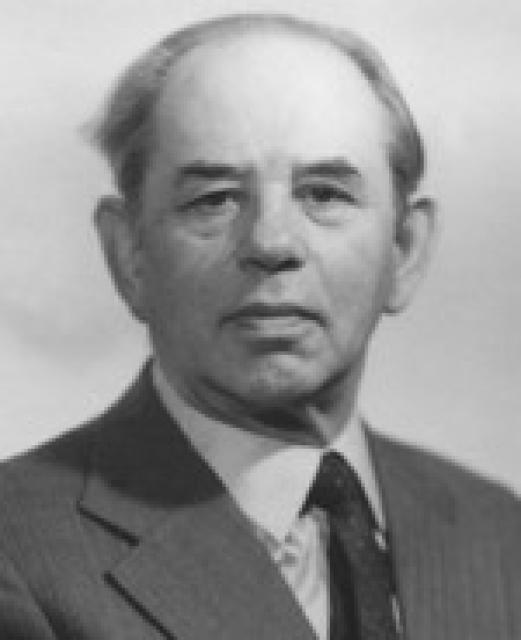
Theodor Izrailevich Oizerman was born on October 23, 1914, in the village of Petroverovka, Kherson Governorate, Russian Empire (now the village of Zhovten, Shiryaevsky District, Odessa Oblast, Ukraine). He was raised in a family of mathematics teachers.
In 1930, Oizerman graduated from the 33rd seven-year school in Dnipropetrovsk. Subsequently, he became an apprentice boilermaker at the local locomotive repair plant. In 1931, he relocated with his mother to the town of Kolchugino, Vladimir Oblast, where he found employment as an electrician at the Kolchugino Metalworking Plant.
In parallel with his work, Oizerman attended evening classes at the Rabfak (workers' preparatory faculty). After completing the program, he enrolled in the Philosophy Faculty of the Moscow Institute of Philosophy, Literature, and History (MIFLI), where he studied under the renowned philosopher Alexander Asmus.
Academic Career
In 1938, Oizerman graduated from MIFLI and entered its graduate program in the Department of History of Philosophy. He successfully defended his doctoral dissertation in 1941 on "The Marxist-Leninist Doctrine on the Transformation of Necessity into Freedom."
From 1940 onwards, Oizerman taught at the Faculty of Philosophy of Moscow State University (MSU). Concurrently, he contributed to the consultation department of the journal "Bolshevik" and engaged in lecture activities.
Military Service
During World War II, Oizerman served at the front. He was called up on July 8, 1941, and attended an officer school. After his graduation, he served as a senior political instructor in the political department of an anti-aircraft defense division. He became a member of the Communist Party of the Soviet Union (CPSU) during this time.
From 1943, Oizerman fought on the Voronezh Front and later on the Ukrainian Front as part of an infantry unit. He participated in battles in Poland and Germany, sustaining a concussion during the fighting on the Kursk Bulge. After the war, he remained in service until 1946, stationed in Baden near Vienna.
Post-War Academic Career
Following his demobilization in June 1946, Oizerman returned to his academic work. Initially, he taught at the Moscow Economic Institute. In 1947, he rejoined the Philosophy Faculty of MSU, where he became acting head of the Department of History of Foreign Philosophy in 1949.
Doctoral Dissertation and Professorship
In October 1951, Oizerman defended his doctoral dissertation on "The Development of Marxist Theory in the Light of the Revolutions of 1848." From 1954 to 1968, he served as head of the Department of History of Foreign Philosophy at MSU.
In parallel, Oizerman was also a professor at the Higher Party School of the Central Committee of the CPSU from 1962 to 1966. From 1968 onwards, he held the position of professor and senior researcher at the Institute of Philosophy of the USSR Academy of Sciences (later the Russian Academy of Sciences).
Literary and Academic Contributions
Oizerman authored numerous publications, including monographs, textbooks, and articles. His primary areas of research focused on the history of German classical philosophy and Marxism, the theory of the historico-philosophical process, epistemology, and the philosophical views of Immanuel Kant, Georg Hegel, Johann Gottlieb Fichte, and Friedrich Schelling.
He was also the compiler of the six-volume Collected Works of Immanuel Kant (Moscow: Mysl, 1964). One of his most widely cited works in international literature is his 1981 article "Kant's Doctrine of the 'Things in Themselves' and Noumena," which explores the differences between Kant's concept of the thing-in-itself and his notion of noumena.
Awards and Recognition
Oizerman received numerous awards and accolades for his contributions to philosophy. These included the Lomonosov Prize (1965), the G.V. Plekhanov Prize of the USSR Academy of Sciences (1981), and the State Prize of the USSR (1983). He was also an honorary doctor (honoris causa) of the University of Jena (1981).
Personal Life
Theodor Oizerman had three children:Ilya Teodorovich Kasavin (born 1954): Russian philosopher, Doctor of Philosophy, professor, corresponding member of the Russian Academy of Sciences, and head of the Sector of Social Epistemology at the Institute of Philosophy of the Russian Academy of Sciences.
Maxim Teodorovich Oizerman (born 1939): Russian engineer, member of the Board of Directors of the Institute for Moscow Development, and co-author of the monograph "Problems of Methodology and Technology of Engineering Surveys" (1985).
Elena Teodorovna Sokolova (born 1945): Doctor of Psychology (1992), professor in the Department of Neuro- and Pathopsychology at Lomonosov Moscow State University (1993).
Theodor Izrailevich Oizerman passed away on October 24, 2017, at the age of 103, leaving behind a legacy as one of the most prominent philosophers of the 20th century.