George Shaw
- Education and a Change of Direction
- A Naturalist at the British Museum
- The Illustrated Naturalist’s Miscellany
- Personal Life and Final Years
- Legacy and Significance
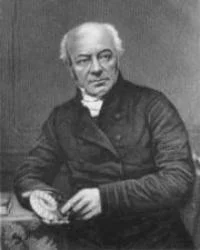
Born in the Buckinghamshire village of Bierton on 10 December 1751, George Shaw grew up in a clerical household and developed an early interest in the natural world. His father, the Reverend Timothy Shaw, educated him at home before he entered Magdalen Hall, Oxford, in 1765. Shaw graduated with a bachelor’s degree in 1769 and a master’s in 1772, but the path laid out for a clergyman soon gave way to a different calling: the study of plants and animals.
Education and a Change of Direction
Shaw was ordained a deacon in 1774 and initially assisted his father in church work. Yet natural history continued to pull him away from a conventional clerical career. He studied medicine at the University of Edinburgh, then returned to Oxford, where he became deputy lecturer in botany. In 1787 he received bachelor’s and doctor’s degrees in medicine. He subsequently moved to London and practiced as a physician, while increasingly making his mark among the naturalists of the day.
The late eighteenth century was a period of intense interest in classifying the natural world. Shaw joined the circle around botanist James Edward Smith and helped found the Linnean Society of London in 1788. He was elected a Fellow of the Royal Society the following year and later served as vice-president of the Linnean Society. These roles connected him to the networks through which specimens, observations, and new descriptions circulated.
A Naturalist at the British Museum
In 1791, Shaw joined the British Museum’s natural history department as an assistant keeper. He became keeper in 1807 and remained in the post until his death. The museum offered a steady stream of specimens from across the expanding networks of exploration and trade, including animals arriving from Australia. Shaw’s work helped turn such objects into documented subjects of scientific inquiry.
His publications included Zoology of New Holland, issued in 1794, which described animals from Australia and nearby islands. He also contributed to General Zoology, a large-scale work begun in 1800 and continued beyond his lifetime. It brought together descriptions of animals across a broad range of groups and reflected the era’s ambition to organize natural history in comprehensive, accessible form.
The Illustrated Naturalist’s Miscellany
Shaw’s best-known project was The Naturalist’s Miscellany, a serial published from 1789 to 1813. Its pages paired concise descriptions with carefully colored illustrations, many produced by the artist Frederick Polydore Nodder. The format brought unfamiliar creatures before readers through both image and text, and the work became an important record of zoological specimens reaching Britain.
Among its landmark contributions was Shaw’s 1799 account of the platypus, based on a preserved specimen sent from New South Wales. He described it under the name Platypus anatinus; the animal is now known scientifically as Ornithorhynchus anatinus. The unfamiliar combination of a duck-like bill, fur, and mammalian features made it a striking challenge for European naturalists’ expectations. Shaw also published early scientific descriptions of several other Australian animals, including the echidna and wombat. His writing and the accompanying illustrations helped establish these creatures in the contemporary record of natural history.
Personal Life and Final Years
Biographical accounts offer few details about Shaw’s private life, which remains less visible than his professional work. He divided his adult years among medicine, teaching, scholarly societies, writing, and museum service. His career crossed several fields: he was trained as a physician, worked as a botanist, and became best known for zoology.
Shaw died on 22 July 1813, aged 61. The Naturalist’s Miscellany reached its final volume that year, while General Zoology continued under other hands after his death. His long tenure at the British Museum and the animals he described tied his name to a formative period in the documentation of Australian wildlife.
Legacy and Significance
Shaw’s lasting influence rests on the combination of close observation, scientific description, and illustrated publishing. His work helped make the platypus, echidna, wombat, and other Australian species part of the recognized zoological record in Europe. The Naturalist’s Miscellany, in particular, shows how images could carry scientific knowledge to readers encountering these animals for the first time. His contributions remain part of the history of natural history publishing and the early study of Australia’s distinctive fauna.