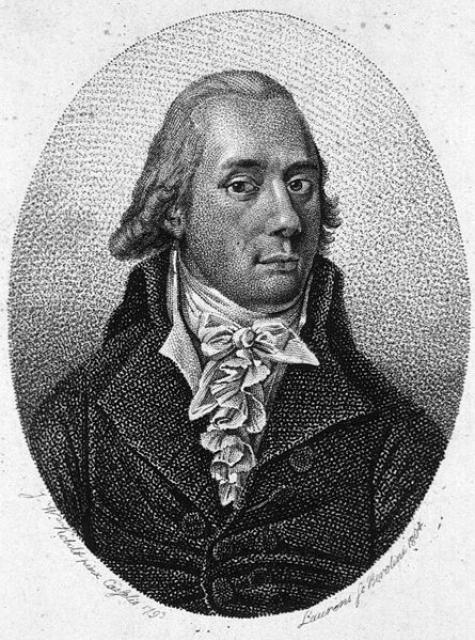
Johann Blumenbach
 Germany
- Johann Friedrich Blumenbach: An Illustrious German Scientist
- Early Life and Education
- Contributions to Comparative Anatomy
- Human Natural History and Racial Classification
- Physiological Principles
- Publications and Collaborations
- Later Life and Legacy
- Racial Taxonomy and Craniology
- Impact on Scientific Thought
Johann Friedrich Blumenbach: An Illustrious German Scientist
Johann Friedrich Blumenbach, a renowned German anatomist, anthropologist, and naturalist, was born on May 11, 1752, in the historic town of Gotha in Thuringia.
Early Life and Education
Blumenbach commenced his education in Jena and later became a professor of medicine and director of the natural history museum in Göttingen from 1776 onwards. As a highly respected figure, he was known as "magister Germaniae" and attracted students from across the globe.
Contributions to Comparative Anatomy
Blumenbach's significant contributions to comparative anatomy were instrumental in its development. His lectures and the widely translated book "Handb. der vergleichenden Anatomie und Physiologie" played a pivotal role.
Human Natural History and Racial Classification
Anthropology was a primary focus of Blumenbach's research. He established a classification system dividing humanity into five races, which was widely accepted until recent times. His extensive collection of skulls, "Collectionis craniorum diversarum gentium decades VII," laid the groundwork for the scientific discipline of craniology.
Physiological Principles
Blumenbach's physiological treatise, "Ueber den Bildungstrieb und das Zeugungsgesch ä ft," introduced the concept of "Bildungstrieb" (formative impulse), which he believed was inherent in all organs and drove their development, maintenance, and repair. His five principles of life also included sensitivity, irritability, vital force, and reproduction.
Publications and Collaborations
Blumenbach's authoritative works on natural history, "Handb. d. Naturgeschichte," and physiology were highly influential. He forged connections with eminent naturalists during his journey to England in the late 18th century.
Later Life and Legacy
Blumenbach continued his academic pursuits for six decades, retiring only when his physical capabilities diminished. He passed away on January 22, 1840.
Racial Taxonomy and Craniology
Blumenbach's racial taxonomy classified human variations into five races: Caucasian (white), Mongolian (yellow), Malayan (brown), Negroid (black), and American (red). He emphasized the correlation between physical traits and mental abilities, linking cranial measurements and phrenology to racial characteristics. His research on craniology influenced subsequent scientific racism.
Impact on Scientific Thought
Blumenbach's ideas stimulated further research and contributed to the emergence of scientific racism. His works inspired biologists and comparative anatomists in the 19th century, including William Wells, William Lawrence, James Prichard, Henry Huxley, and William Flower.




