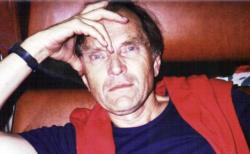
Georges Bataille
 France
Biography of Georges Bataille
George Bataille (1897-1962) was a French writer and philosopher who played a prominent role in the intellectual and artistic scene of France in the 1940s and 1950s. Born on September 10, 1897, in Biarritz, Bataille attended high school in Reims from 1901 to 1913.
In 1914, Bataille converted to Catholicism and completed his studies at College d'Épernay in 1915. He then entered École des Chartes in Paris, where he defended his thesis on "The Knightly Order", a poetic tale from the 13th century, in 1922. Bataille received the qualification of archival paleographer. That same year, he began working at the National Library of Paris, where he remained until 1942.
During the early 1920s, Bataille was greatly influenced by Lev Shestov and started reading works by Dostoevsky, Kierkegaard, Pascal, and Plato. He participated in the translation of Shestov's book "Good in the Teaching of Tolstoy and Nietzsche" into French in 1925. His interests also extended to Nietzsche, Freud, de Sade, and later Hegel and Marx.
Bataille started publishing articles in journals such as "Aréthuse" and "Documents," which focused on art history, archaeology, and ethnography. In 1931, he met Boris Souvarine and joined the Democratic Communist Circle, which disbanded in 1934. During this time, Bataille published several articles in the journal "La critique sociale," including "Critique of the Foundations of Hegelian Dialectics" (1932), which proposed the enrichment of Marxist dialectics through the inclusion of Freud's psychoanalysis and sociology by Moss and Durkheim; "The Problem of the State" (1933), which criticized revolutionary optimism, fascist totalitarianism, and socialist dictatorship; and "The Psychological Structure of Fascism."
Bataille was the first in France to apply psychoanalytic methods to analyze political problems. He participated in seminars led by Alexandre Koyré at the School of Advanced Studies in 1931 and then joined Alexandre Kojève's seminar in 1934. In collaboration with Raymond Queneau, Raymond Aron, Maurice Merleau-Ponty, Eric Weil, André Breton, and others, Bataille worked on the translation and commentary of Hegel's "Phenomenology of Spirit" (the seminar continued until 1939). In 1935, he participated in a group organized by Jacques Lacan.
In the same year, Bataille became one of the initiators of the "Contre-Attaque" movement, which brought together left-wing intellectuals of various creative orientations, including surrealists. The movement advocated anti-nationalism, anti-capitalism, anti-parliamentarianism, and even anti-democracy. Its main goal was to replace the myths of fascism with the myths of moral and sexual revolution. The inspiration for "Contre-Attaque" came from the works of the Marquis de Sade, Fourier, and Nietzsche. The movement dissolved in 1936 after its members participated in street demonstrations protesting the actions of the nationalist organization "Action Française." Bataille and other members of the movement were accused of pro-fascist sentiments due to their interpretation of Hitler's "undiplomatic rudeness" as a positive alternative to the "slobbering" of politicians and diplomats.
In 1936, Bataille began organizing the secret society "Acéphale" and simultaneously launched a journal with the same name. The society, founded in 1937, included members such as Klossowski, Chave, Shannon, and others. One of the society's rules was not to shake hands with anti-Semites. In the same period, Bataille organized the Society of Collective Psychology, which aimed to study the role of psychological factors, including the unconscious, in social life. Bataille's work focused on the problems of death as the foundation of social relations, guilt (as explored in his book "The Guilty" in 1944), sin, evil, and inner experience (published as "The Inner Experience" in 1943).
In 1946, Bataille initiated the publication of the journal "Critique," where he published articles such as "The Moral Meaning of Sociology," "The Secret of Sade," "About the Stories of Hiroshima's Inhabitants," "From the Animal to the Human and the Birth of Art," "Communism and Stalinism," and "Sadism (1740-1814)," among others. In the following years, Bataille wrote works such as "On Nietzsche" (1945), "Method of Meditation" (1947), "Literature and Evil" (1957), and "Eroticism" (1957). Bataille was awarded the Legion of Honor in 1952. He died in Paris on July 8, 1962.