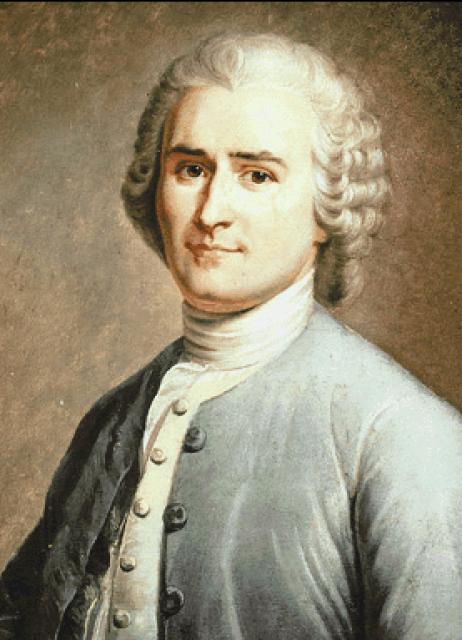
Jean-Jacques Rousseau
 France
Biography of Jean-Jacques Rousseau
Jean-Jacques Rousseau was a French writer, philosopher, composer, and representative of sentimentalism. He was born in Geneva in 1712 to Isaac Rousseau, a clockmaker, and Suzanne Bernard, the granddaughter of a pastor. Unfortunately, Rousseau's mother passed away shortly after his birth and his father had to leave Geneva in 1722.
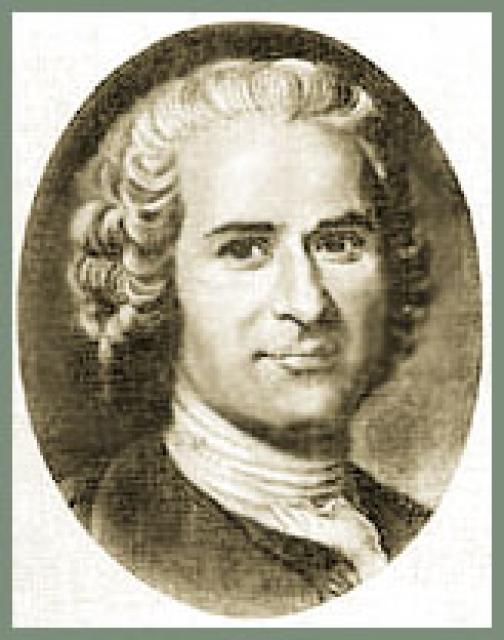
From 1723 to 1724, Rousseau spent time at the Protestant boarding school in Bosses near the French border. Upon returning to Geneva, he prepared to become a legal clerk and then learned the trade of engraving in 1725. However, unable to tolerate the tyranny of his employer, Rousseau left his hometown in 1728.
As a representative of sentimentalism and a deist, Rousseau condemned the official church and religious intolerance. In his works, such as "Discourse on the Origin and Basis of Inequality..." (1755) and "The Social Contract" (1762), Rousseau opposed social inequality and the despotic power of the monarchy. He idealized the natural state of universal equality and freedom of individuals, which he believed had been destroyed by the introduction of private property. According to Rousseau, the state can only arise from a contract between free individuals.
Rousseau's aesthetic and pedagogical views were expressed in his novel-treatise "Emile, or On Education" (1762). His epistolary novels "Julie, or the New Eloise" (1761) and "Confessions" (published in 1782-89), which focused on the "private" spiritual life, contributed to the development of psychologism in European literature. His work "Pygmalion" (published in 1771) is an early example of melodrama.
Rousseau's ideas, such as the worship of nature and naturalness, criticism of urban culture and civilization that distort the inherently pure human being, and the preference of the heart over reason, have influenced the social thought and literature of many countries. Some of his notable quotes include: "The more laws you multiply, the more you corrupt them." "A wise man withdraws a minute before he would have been superfluous." "People are mistaken not because they do not know, but because they think they know."



