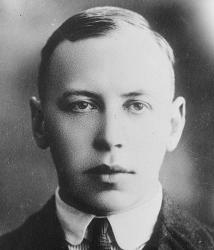
Georges Bernanos
 France
- Georges Bernanos: A Passionate Writer and Thinker
- A Late-Blooming Artist
- An Unwavering Idealist
- Characters Reflecting Good and Evil
- The Tragedy of Existence
- The Presence of Good
Georges Bernanos: A Passionate Writer and Thinker
Georges Bernanos was a French writer and journalist known for his complex and seemingly contradictory ideological positions. Despite his fervent support for monarchy, he fiercely criticized the monarchist organization "Action Française". As a devout Catholic, he faced condemnation from the official church. While being an admirer of nationalist Charles Maurras, he condemned the nationalism of the Franco regime. Bernanos' beliefs were often unstable and malleable, yet he remained steadfastly committed to his ideals of justice, love, and self-sacrifice.

A Late-Blooming Artist
Bernanos published his first novel, "Under the Sun of Satan," at the age of thirty-eight, which brought him recognition but did not alleviate his financial struggles. In the last fifteen years of his life, he lived a nomadic existence, traveling to places like Mallorca, Brazil, and Tunisia, where he wrote his notable works such as "Crime" (1935), "A Bad Dream" (published in 1950), "Diary of a Country Priest" (1936), "The New History of Mussetta" (1937), and "Monsieur Ouine" (1943).
An Unwavering Idealist
Despite his shifting worldview, Bernanos remained unwaveringly faithful not to monarchy or Catholicism, but to his ideal of justice, love, and self-sacrifice. He believed that only through a specific political and religious concept could these ideals counteract the degradation of the bourgeois world. Despite the conservatism inherent in the ideological system he tried to align with, Bernanos managed to become a passionate critic of hypocrisy, conformism, and selfishness within the bourgeoisie.
Characters Reflecting Good and Evil
Bernanos' literary characters can be divided into two types: those living in an atmosphere of spiritual emptiness and boredom, and those driven by the ideals of love and compassion, whom he refers to as the "saints". This reflects Bernanos' belief in the existence of two opposing forces in the world: Good and Evil. According to Bernanos, a person turns to evil not due to moral weakness or misunderstanding, but because Evil possesses an irresistible allure. Evil can take various forms, including the vain pride of modern aristocrats, the empty talk of liberals, the narrow-mindedness of ordinary people, and the ignorance of peasants.
The Tragedy of Existence
While the characters in Bernanos' works often feel the boredom of life, they do not find liberation but rather a keen sense of fear and loneliness. Bernanos believed that attempting to overcome boredom by embracing sin or individualistic self-assertion only deepened despair, leading to a critical point of self-destruction.
The Presence of Good
However, Bernanos also believed in the existence of Good. For him, it was not a rational, constructed concept but a natural feeling of selfless trust in others, most inherent in children. The "saintly" positive characters in Bernanos' works are not perfect individuals leading righteous lives without doubts or sufferings. Rather, they possess one precious human quality: "childlikeness." In practical life, they may be helpless and inept, lacking talent, intelligence, or knowledge. However, their strength lies in their indomitable love for others, for which they are willing to expiate the sins and crimes of others through their own suffering. Bernanos, however, recognized that the redemptive sacrifices of his characters could not free the world from the grip of Evil. Therefore, his books are permeated with a sense of tragedy, born out of the author's pain for the suffering of humanity.