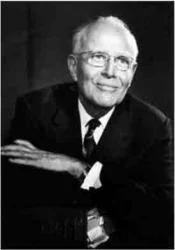
Georges Cuvier
- Education and Early Career
- Comparative Anatomy and Extinction
- Catastrophism and Scientific Debate
- Public Career and Legacy
Georges Cuvier was a French naturalist whose work transformed the study of fossils and animal anatomy. By comparing fossil bones with those of living species, he showed that many ancient animals had no living counterparts and that extinction was a real part of Earth’s history. He helped establish vertebrate paleontology and comparative anatomy as scientific disciplines, while his influential theories about abrupt geological catastrophes later gave way to explanations based on gradual change.
Education and Early Career
Cuvier was born on 23 August 1769 in Montbéliard, then part of the Duchy of Württemberg. Raised in a Protestant family, he studied at the Academy of Stuttgart, where he received training in science and administration. After graduation, he worked as a tutor in Normandy. His knowledge of natural history attracted the attention of scholars in Paris, and in 1795 he moved to the capital to work at the National Museum of Natural History.
Cuvier quickly gained a reputation for precise observation and lively teaching. He became a professor at the Collège de France and held influential posts at the museum. He was also drawn into public service, taking on educational and administrative responsibilities under successive French governments.
Comparative Anatomy and Extinction
Cuvier’s central scientific method was comparison. He argued that an animal’s body parts formed an integrated system: the shape of a tooth, for example, could reveal what an animal ate and how it lived. This approach helped him reconstruct extinct species from fragmentary fossil remains.
In the 1790s, he compared fossil elephant bones with those of living elephants and established that mammoths and other fossil forms belonged to distinct, vanished species. At a time when many naturalists resisted the idea that species could disappear, his evidence helped make extinction an accepted scientific fact. His studies of fossils from the Paris Basin and his multivolume Researches on the Fossil Bones of Quadrupeds further developed the new science of paleontology.
Cuvier classified animals according to their anatomy and produced the influential book The Animal Kingdom, published in 1817. His system and his principle that body structures should be understood in relation to one another shaped zoology for generations.
Catastrophism and Scientific Debate
Cuvier believed that the fossil record showed successive faunas separated by sudden catastrophic events. He argued that these revolutions had caused extinctions, after which new forms appeared. His catastrophism helped explain geological discontinuities, though his rejection of species transformation put him at odds with thinkers such as Jean-Baptiste Lamarck and Étienne Geoffroy Saint-Hilaire. Later geology and evolutionary biology offered accounts of change that differed from Cuvier’s.
Public Career and Legacy
Cuvier was elected to leading French scientific institutions and received honors from Napoleon and later monarchies. He died in Paris on 13 May 1832. His political influence was considerable, and his scientific legacy remains more enduring: close anatomical comparison, rigorous fossil reconstruction and the recognition of extinction became foundations of modern paleontology.