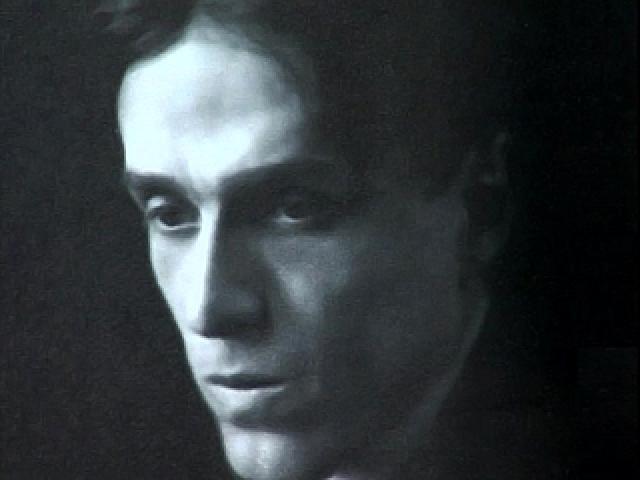
Georges Pitoeff
 Switzerland
Georges Pitoëff: A Pioneer of Modern French Theater
Georges Pitoëff was a Russian and French actor and theater director, of Armenian descent. He was a prominent figure in the world of theater and one of the founders of the "Cartel des Quatre," a group that laid the foundation for modern French theater. Pitoëff began his education at Moscow University and later attended the Institute of Railway Engineering in Saint Petersburg. In 1904-1908, he studied law at the University of Paris.
Upon returning to Russia in 1908, Pitoëff began collaborating with the V.F. Komissarzhevskaya Theater in Saint Petersburg. He later joined the acting troupe of P.P. Gaydeburkov and N.F. Skarskaya known as the "Traveling Theater." In 1912, Pitoëff founded "Nash Theater" in Saint Petersburg, which consisted of young directors and actors. Under his direction, the theater staged plays by Russian and international authors.
In late 1914, due to family circumstances, Pitoëff left Russia and first traveled to Paris, then to Geneva. This marked the end of his "Russian" period. In France, Georges met Lyudmila Smanova, a Russian woman who became his wife in 1915 and gained fame as a renowned French actress. From July 1915 to January 1922, the Pitoëffs worked in Switzerland, primarily performing in the suburbs of Geneva, Pléiades, and later in Paris. Their repertoire included plays by Chekhov, Leo Tolstoy, Maxim Gorky, Bernard Shaw, Ibsen, Bjørnson, Maeterlinck, Strindberg, and Sing. They also staged several plays by William Shakespeare, such as "Macbeth," "Hamlet," and "Measure for Measure."
In December 1921, at the invitation of Jacques Hébertot, the owner of the Théâtre des Champs-Élysées in Paris, the Pitoëff troupe relocated to France. On February 1, 1922, the Georges Pitoëff Theater had its grand opening. Among the notable productions staged by Pitoëff in Paris were Chekhov's "Uncle Vanya" and "The Seagull." Despite limited scenery and heavy curtains dividing the stage into foreground and background, Pitoëff successfully introduced the subtle psychology of Chekhov's drama to the French audience. He was the first director to truly acquaint the French with the legacy of Anton Chekhov. Pitoëff not only directed Chekhov's plays but also brilliantly played many roles in these productions.
From the second half of the 1920s, Pitoëff's productions began to shift their focus. While the early staging of "Hamlet" in 1920 celebrated the greatness of the individual and the fight for justice, the 1926 production of "Hamlet," masterfully played by Pitoëff, portrayed a broken character whose ideals were shattered when confronted with the harsh reality of the world. Similarly, Pitoëff's later Chekhovian productions, such as "Three Sisters" in 1929, emphasized tragedy and the tragic nature of the human condition. Pitoëff's final production, staged in 1939 while he was seriously ill, was Henrik Ibsen's "An Enemy of the People," in which he played the role of Dr. Stockmann, following the Stanislavski method.


