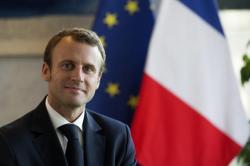
Georges Pompidou
 France
Georges Jean Raymond Pompidou
Georges Jean Raymond Pompidou was a French statesman, serving as Prime Minister (1962-1968) and President (1969-1974) of the Fifth Republic. He was also the leader of the right-wing Gaullist party. His tenure as Prime Minister and President was marked by economic growth, technological modernization, and further development of European structures.
Early Life and Education
Pompidou was born on July 5, 1911, in Montboudif, France. His parents were teachers from a peasant background. He received his baccalaureate (bac) in Albi and then attended the Paris École Normale Supérieure, where he studied literature and became friends with Léopold Sédar Senghor, the future president of Senegal. Pompidou received his teaching diploma and a diploma from the Free School of Political Sciences.
Career
After the outbreak of World War II, Pompidou interrupted his teaching career and joined the French army. He served as a lieutenant until the fall of France in 1940 and then became involved in the Resistance Movement. During this time, he wrote a literary study on Racine's tragedy "Britannicus," which was published in 1944. Pompidou's literary works also reflected his political thoughts. In 1955, he wrote about the novels of André Malraux, a close associate of Charles de Gaulle and a future Minister of Culture in Pompidou's government.
Pompidou began his political career working for de Gaulle after the liberation of France. He served as a member of the Temporary Government, the State Council, and the Tourism Committee. In 1958, he joined the Rothschild bank as a manager while continuing his involvement with the Gaullist movement. He also managed the Anna de Gaulle Foundation, a charitable organization established by de Gaulle in memory of his deceased daughter who had Down syndrome.
In 1962, after a referendum approved the Evian Accords on Algerian independence, Pompidou became the Prime Minister of France. He served in this position for six years, leading five different cabinets. It was the longest tenure as head of the government in the history of the French Republic.
During his premiership, Pompidou faced challenges such as inflation, strikes, and protests, including the famous May 1968 events. He implemented measures to control inflation, negotiate with trade unions, and settle the strikes. Despite facing opposition, his government was able to maintain economic growth and social stability.
After de Gaulle's resignation in 1969, Pompidou ran for president and won the election. As president, he pursued an independent foreign policy from the United States and NATO, while also advocating for a stronger and more united Europe. His presidency was marked by closer relations with the Soviet Union and the establishment of diplomatic ties with China.
Pompidou's presidency ended prematurely when he passed away on April 2, 1974, from Waldenström's macroglobulinemia, a rare form of cancer. He was succeeded by Valéry Giscard d'Estaing.
In addition to his political career, Pompidou was a lover of art and literature. He founded the Centre Pompidou, a museum of modern art in Paris, and compiled an anthology of French poetry. He remained married to his wife, Claude Pompidou, until his death, and they had one adopted son named Alain Pompidou.
Georges Pompidou's presidency left a lasting impact on France, with his economic policies and commitment to European integration shaping the country's future.