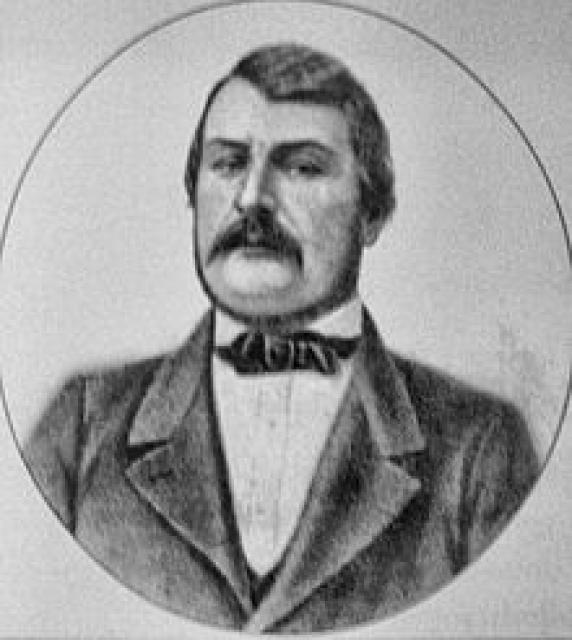
Georgij Eristov
- A Georgian Literary Luminary: Giorgi Eristavi
- The Polish Exile and Return
- The Birth of Georgian Theater
- "Tsisqari": A Cultural Renaissance
- Literary Legacy: Plays, Poems, and Translations
- The Father of Modern Georgian Literature
- Literary Lineage
A Georgian Literary Luminary: Giorgi Eristavi
Early Life and EducationGiorgi Eristavi (Prince Giorgi Davidovich), a renowned Georgian playwright and journalist, was born in 1811. Educated in Tiflis (modern-day Tbilisi) and Moscow, he served as an official under the Tiflis governor and in the entourage of the Viceroy of the Caucasus.
The Polish Exile and Return
In 1832, Eristavi's involvement in a conspiracy aimed at restoring Georgian political autonomy led to his exile to Poland. There, he immersed himself in Polish literature, translating works by poets like Adam Mickiewicz and forging a deep connection with his "new homeland."
The Birth of Georgian Theater
Upon his return to Georgia, Eristavi's literary talents caught the attention of Prince Mikhail Vorontsov. On January 2, 1850, he staged his comedy "Razdel" (Division), marking the inception of Georgian theater. Eristavi's role as director of the Georgian theater troupe, supported by Vorontsov, cemented his position as a pioneer in the field.
"Tsisqari": A Cultural Renaissance
Under Vorontsov's patronage, Eristavi launched Georgia's first literary journal, "Tsisqari" (Dawn), which featured his own poetry and that of notable Georgian writers like Alexander Chavchavadze and Nikoloz Baratashvili. "Tsisqari" became a vehicle for social and intellectual awakening, serving as a catalyst for Georgian cultural development.
Literary Legacy: Plays, Poems, and Translations
Eristavi's plays, such as "Razdel" and "Tyazhba" (Lawsuit), offer a window into Georgian society, exposing its superstitions, prejudices, and societal divisions. His comedies satirize the decadence and lethargy of the nobility, while highlighting the challenges faced by the educated youth of his time. Additionally, Eristavi was an accomplished translator, introducing Georgians to works by prominent figures such as Griboyedov, Pushkin, Lermontov, Schiller, Hugo, and more.
The Father of Modern Georgian Literature
Eristavi is widely recognized as the father of modern Georgian literary language, having standardized the Kartlian dialect as its basis. His works have been translated into Russian, German, and other languages. A collection of his writings, accompanied by a biography by I. Meunargia, was published in Tiflis.
Literary Lineage
Eristavi's son, Prince David Georgiyevich, inherited his father's literary mantle, translating and adapting French plays for the Georgian stage. He also served as editor of the newspaper "Kavkaz" (Caucasus) and contributed international affairs commentaries to "Iveria," a Georgian newspaper.




