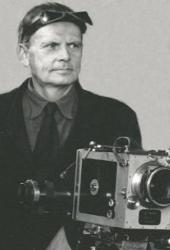
Georgiy Beisingertz
- Life and Career of a German-Soviet Film Artist
- Arrival in the Soviet Union
- Cinematographic Contributions
- Filmography and Recognition
Life and Career of a German-Soviet Film Artist
Early Life and Artistic RootsGerman-born artist and cinematographer attended the prestigious art school in his hometown before venturing into the world of filmmaking. His artistic background played a significant role in his creative approach to cinema, influencing his unique visual style and attention to detail.
Arrival in the Soviet Union
In the mid-1920s, he relocated to the Soviet Union, where he immersed himself in the burgeoning film industry. He worked primarily for VUFKU, a major film studio in Odessa, as a production designer for a series of notable motion pictures.
Cinematographic Contributions
Aside from his artistic direction, he also served as a cinematographer for several films, including "Cherevichki" (1927), where he collaborated with Boris Zavelyev and Vasily Krichevsky. His expertise in both fields allowed him to contribute significantly to the visual and narrative aspects of these projects.
Filmography and Recognition
His extensive filmography includes the following works:"Spartak" (1926)
"Fresh Wind" (1926)
"Mitya" (1926)
"Hamburg" (1926)
"Benya Krik" (1926)
"Cherevichki" (1927)
"Briefcase of a Diplomatic Courier" (1927)
"The Road to Damascus" (1927)
"In Pursuit of Happiness" (1927)
"Boryslav Laughs" (1927)
"Sold Appetite" (1928)
"Avalanche" (1928)
"Beyond the Wall" (1928)
"Behind the Monastery Walls" (1928)
Legacy and Influence
Through his artistic innovations and collaborations, he left an enduring mark on the development of Soviet cinema. His vision and attention to detail continue to inspire contemporary filmmakers and scholars.