
Georgy Jukov
 Russia
Biography of Georgy Zhukov
Georgy Konstantinovich Zhukov was born on November 19 (December 1), 1896, in the village of Strelkovka, Ugodsko-Zavodskoy volost, Maloyaroslavetsky district, Kaluga region (now Zhukovsky district of Kaluga region), in the family of peasants Konstantin Artemyevich and Ustinya Artemyevna Zhukov. Zhukov had three daughters: Era Georgievna, Ella Georgievna, and Maria Georgievna. All of them have higher education and live in Moscow.
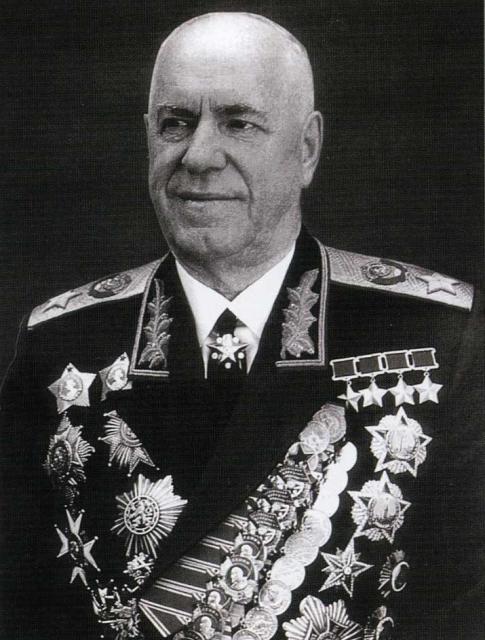
Early Military Career
On August 7, 1915, Georgy Zhukov was drafted into the army and enrolled in the 5th Reserve Cavalry Regiment, located in the city of Balakleya in the Kharkov province. Since then, Zhukov dedicated his life to the military. In the spring of 1916, he was assigned to a team for training as a junior non-commissioned officer. After a short period of training, Zhukov was sent to the 10th Dragoon Regiment, where he participated in battles on the front. In the fall, he was severely wounded in a mine explosion and sent to the Kharkov Military Hospital. Zhukov was twice awarded the Order of St. George for his achievements in combat and capturing a German officer. He volunteered for the Red Army and soon became a platoon commander and then a squadron commander. He participated in battles on the Eastern, Turkestan, and Southeastern fronts. He was wounded in hand-to-hand combat by a grenade, which resulted in injuries to his left leg and side. He was sent to Red Army courses and after the end of the Civil War, Zhukov commanded a squadron, then a cavalry regiment in 1923, and a cavalry brigade from May 1930. He later became the assistant inspector of cavalry of the Red Army, commanded the 4th Cavalry Division, and the 3rd and 6th Cavalry Corps. In July 1938, Zhukov became the deputy commander of the Belorussian Special Military District for cavalry. The following year, he took command of the 57th Special Corps and then the 1st Army Group of Soviet forces in Mongolia. Under his command, this army group, together with units of the Mongolian People's Revolutionary Army, conducted an operation to surround and defeat a large group of Japanese troops in the area of the Khalkhin Gol River. The combat experience gained in the Khalkhin Gol battles was studied by the military and significantly contributed to the development of Soviet military science.

World War II
In early May 1940, Georgy Zhukov was received by Joseph Stalin. This was followed by his appointment as the commander of the Kiev Special Military District. In the same year, the decision was made to confer the rank of general on the senior command staff of the Red Army. Zhukov was appointed as an army general. In the Kiev Special Military District, the new commander immediately demanded that unit commanders train their troops under conditions similar to combat, and initiated command and staff exercises and combat readiness inspections. In December 1940, a meeting was held in the General Staff with the participation of district and army commanders, members of the Military Councils, and chiefs of staff. General Army General Zhukov delivered a report, emphasizing that a German fascist attack on the Soviet Union was inevitable. He pointed out that the Red Army would be dealing with the strongest army in the West. Based on this, Georgy Konstantinovich identified the main task of accelerating the formation of tank and mechanized units, strengthening the Air Force and air defense. In late January 1941, Zhukov was appointed the Chief of the General Staff, the Deputy People's Commissar of Defense of the USSR. With the help of his closest aides, he quickly mastered this multifaceted and highly responsible position. The General Staff performed important operational, organizational, and mobilization work. However, Zhukov immediately identified significant shortcomings in its activities, as well as in the work of the People's Commissar of Defense and the commanders of the armed forces. In particular, no measures were taken to prepare command posts from where all Armed Forces could be managed, quickly transmit directives from the Stavka to the troops, receive and process reports from the troops. The activities of the General Staff under the leadership of Zhukov significantly intensified. Above all, it was directed towards successfully preparing our army for war in a short period of time. However, time had already been wasted. On June 22, 1941, the German fascist forces attacked the Soviet Union and the Great Patriotic War began. The General Staff switched to working around the clock. In the difficult situation of intense border battles, Zhukov almost constantly remained at the front and took measures to repel the enemy's attacks.
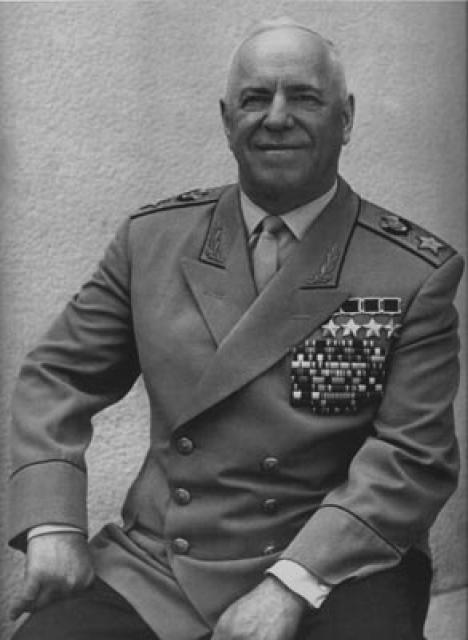
Later Career and Legacy
In April-May 1945, Zhukov commanded the 1st Belarusian Front, which successfully carried out the Berlin Offensive Operation in coordination with the 1st Ukrainian and 2nd Belorussian Fronts. After defeating the largest group of German troops, they captured Berlin. On May 8, 1945, on behalf of the Soviet Supreme High Command, Georgy Zhukov accepted the capitulation of fascist Germany in Karlshorst. This was the most significant moment in the biography of the outstanding military leader. The second outstanding event in his life was the Victory Parade on Red Square. Zhukov, the general who made a tremendous contribution to the defeat of fascism, had the honor of leading this historic parade. After the war, Zhukov became the Commander of the Soviet Group of Forces in Germany and the Chief of the Soviet Military Administration. He held various high-ranking positions in the military and government, including Minister of Defense of the Soviet Union from February 1955 to October 1957. Georgy Zhukov passed away on June 18, 1974. He was buried with full honors at the Kremlin Wall Necropolis on Red Square, as an outstanding military and statesman. Zhukov's name has been given to the Air Defense Command Academy. His memory is immortalized in the names of a planet, streets in Moscow, St. Petersburg, and other cities. Monuments to Zhukov have been erected in various cities in Russia and abroad. His autobiography, "Memories and Reflections," is considered one of the most important documents of the era. Georgy Konstantinovich Zhukov is remembered as one of the greatest military leaders in history.



