German Obert
 Germany
- Biography of Hermann Oberth
- Early Career and Experiments
- Personal Life and Further Studies
- Contributions to Rocketry and Space Exploration
- Later Life and Legacy
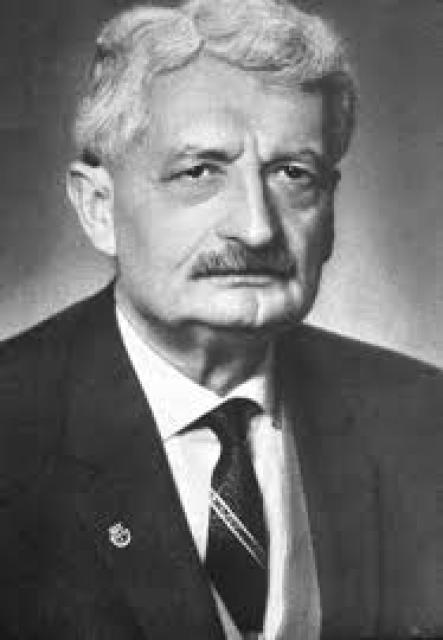
Biography of Hermann Oberth
Early Life and EducationHermann Julius Oberth was born on June 25, 1894, in Hermannstadt (now Sibiu), Romania. At the age of 11, he became fascinated with space travel after reading Jules Verne's novels "From the Earth to the Moon" and "Around the Moon". Oberth attended gymnasium and excelled as a high diver. Through various experiments, he concluded that space travel could only be achieved through rockets.
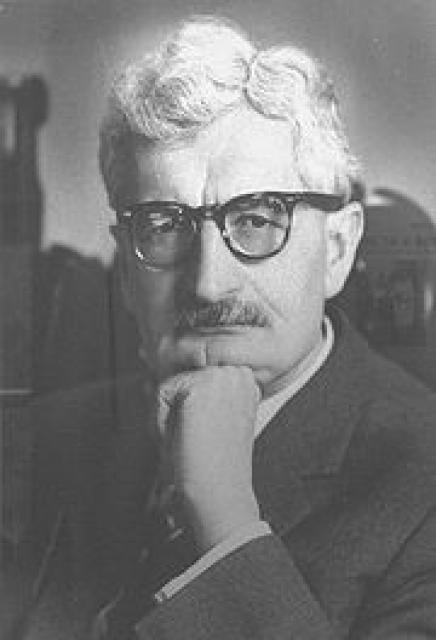
Early Career and Experiments
In 1912, Oberth began studying medicine in Munich, Germany. However, with the outbreak of World War I, he was drafted into the Imperial German Army and sent to the Eastern Front. In 1915, while recovering from injuries in a hospital in Sighișoara, Oberth conducted experiments on weightlessness and resumed his early rocketry projects. By 1917, he successfully constructed a 25-meter tall rocket using liquid fuel and a gyroscope. However, his projects were not financially supported by the military due to their high cost.
Personal Life and Further Studies
In 1918, Oberth married Matilde Himmell and they had four children. Sadly, one of their sons died during World War II, and one of their daughters died in an explosion at a liquid oxygen plant in 1944. In 1919, Oberth returned to Germany to study physics at the University of Munich and later in Göttingen. His dissertation on rocketry was rejected in 1922 but he privately published his work, "Die Rakete zu den Planetenräumen" (The Rocket into Interplanetary Space), in 1923.
Contributions to Rocketry and Space Exploration
In 1928, Oberth became a consultant for the UFA film studio in Berlin, where he worked on the movie "Frau im Mond" (Woman in the Moon). He received funding to build and launch a small rocket. Despite suffering injuries in an explosion in 1929, Oberth successfully developed the "Conical Nozzle" rocket engine in 1930. In 1941, he joined the team working on the V-2 rocket, and in 1943, he received the "Cross of Military Merit 1st Class with Swords" for his bravery during a bombing raid on Peenemünde.
Later Life and Legacy
After World War II, Oberth moved to Italy, where he continued his work on rocketry for the Italian Navy. In the 1950s and 1960s, he expressed his opinions on unidentified flying objects (UFOs) and believed they were extraterrestrial spacecraft. Oberth retired in 1962 and briefly joined the National Democratic Party of Germany. He witnessed the Apollo 11 launch in 1969 and the Challenger launch in 1985. Oberth passed away in Nuremberg on December 28, 1989. He is remembered for his contributions to rocketry and space exploration, and his name has been honored with a lunar crater and an asteroid named after him.