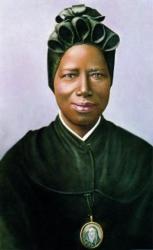
Gerold Grossvalsertalsky
Gerold of Großwalsertal is remembered as the hermit whose name became attached to a monastery in the Austrian Alps. His life survives chiefly through religious tradition rather than contemporary records: the stories describe a nobleman who left a turbulent past behind, made a solitary home in the valley, and became known for his kindness to both people and animals. Modern historians treat the details cautiously, but the legend has given the place of St. Gerold its enduring spiritual identity.
A Life Preserved in Legend
Later accounts place Gerold’s birth around 900, though they disagree about where he came from, naming Saxony or Raetia. According to the best-known version, he was born into a noble family, married, and had two sons, Kuno and Ulrich. After a conflict with Otto I, the future Holy Roman Emperor, Gerold left his former life and sought refuge in the remote valley then known as Frisun.
There, the story says, he took the name Gerold and lived as a hermit and penitent. One memorable episode tells of a bear pursued by hunters that ran to the hermit for protection. The animal settled peacefully at Gerold’s feet, and even the hunting dogs joined the quiet scene. The legend’s image of a man living in harmony with the wilderness became one of the saint’s defining attributes: he is often portrayed beside a hollow tree with a bear nearby.
Other versions say Otto eventually pardoned Gerold and restored his lands. Gerold then gave the property to the Benedictine monastery of Einsiedeln. His sons, having found him in the valley, are said to have joined the religious life at Einsiedeln. These details belong to the hagiographic tradition; they cannot be confirmed from surviving tenth-century documentation.
The Historical Record and the Monastery
The historical evidence is much later than the life described in the legend. The religious house at Frisun is first securely mentioned in records from 1220–1227, under the name Frisun or Frisen. A documented connection with Einsiedeln becomes clear only toward the end of the thirteenth century. The historian Karl Heinz Burmeister notes that neither Gerold himself nor his supposed land donation to Einsiedeln can be established from the surviving records.
That gap does not erase the importance of Gerold’s cult. By the fourteenth century, the name St. Gerold was being used for the place, and the local religious tradition associated the monastery and its lands with the hermit. The community’s own account continues to tell the story of the fugitive Adam, who became Gerold, made peace with Otto, and gave his land to Einsiedeln. The monastery preserves the legend as part of its heritage, while historical scholarship distinguishes that memory from what can be documented.
Veneration and Legacy
Gerold is commemorated in the Catholic calendar on April 19, with a local observance in the Diocese of Feldkirch. Tradition places his death around 978 at Frisun, now St. Gerold, in Vorarlberg. The date is uncertain, and even the identification of the remains associated with the site cannot be proved archaeologically.
The Provostry of St. Gerold grew into a lasting religious center in the Großwalsertal, linked for centuries to Einsiedeln. Its legend has shaped the valley’s cultural memory: the solitary hermit, the tamed bear, the reconciled ruler, and the sons who followed their father into monastic life. Whether read as biography or as a medieval spiritual story, Gerold’s enduring significance lies in the bond his tradition created between a remote alpine landscape and a community of faith.