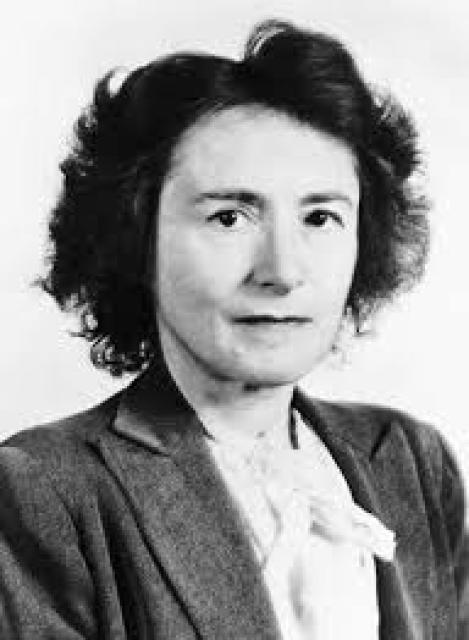
Gerty Cori
 USA
USA- Gerty Theresa Radnitz Cori: Nobel Prize Laureate in Biochemistry
- Marriage and Early Career
- Pioneering Research in Carbohydrate Metabolism
- Synthesis of Glycogen and Nobel Prize
- Later Research and Recognition
- Passion for Mountaineering and Philanthropy
- Death and Legacy
Gerty Theresa Radnitz Cori: Nobel Prize Laureate in Biochemistry
Early Life and EducationGerty Theresa Radnitz Cori, an Austrian-American biochemist, was born in Prague (then part of Austria-Hungary) on August 15, 1896. She was the eldest of three daughters of Otto and Martha Radnitz. After receiving private tutoring and then attending a secondary school in Děčín, Czech Republic, she enrolled in the German University in Prague in 1914 to study medicine. It was during her medical studies that she met her future husband and collaborator, Carl Ferdinand Cori.
Marriage and Early Career
In 1920, Gerty and Carl married and soon moved to Vienna. Gerty worked for two years as an assistant at the Karolinska Children's Hospital, studying cretinism. In 1922, Carl accepted a position as biochemist at the New York State Institute for the Study of Malignant Disease (later the Roswell Park Cancer Institute) in Buffalo, New York. Gerty joined him as an assistant pathologist and later became an assistant biochemist.
Pioneering Research in Carbohydrate Metabolism
Together, the Coris embarked on a series of groundbreaking studies in carbohydrate metabolism. They focused particularly on the biochemical processes involved in the conversion of glucose to glycogen and back. This cycle, known as the Cori cycle, revolutionized our understanding of energy metabolism.
In 1936, the Coris discovered glucose-1-phosphate, later called the Cori ester. Subsequently, they established the biochemical mechanism of action of insulin and identified glucose-6-phosphate and other intermediates in the glycogen cycle.
Synthesis of Glycogen and Nobel Prize
In 1944, the Coris achieved a major milestone by synthesizing glycogen in vitro. This confirmed their hypothesis of the three-step pathway for glycogen biosynthesis from glucose. For their discoveries, they were jointly awarded the Nobel Prize in Physiology or Medicine in 1947, along with Argentine physiologist Bernardo Houssay.
Later Research and Recognition
Gerty Cori continued her research, elucidating the chemical structure of glycogen and identifying specific enzyme deficiencies underlying glycogen storage diseases. Her achievements earned her the Squibb Award of the Endocrine Society (with Carl Cori), the Garvan Medal of the American Chemical Society, and the Borden Award for Medical Research of the Association of American Medical Colleges.
Passion for Mountaineering and Philanthropy
Beyond the laboratory, the Coris were avid outdoors enthusiasts, climbing in both the Austrian Alps and the Rocky Mountains. They also enjoyed tennis, ice skating, and gardening. They had one son.
Gerty Cori's legacy extends beyond her scientific contributions. She was a passionate advocate for education and a generous philanthropist, supporting the establishment of scholarships and funding research grants.
Death and Legacy
Gerty Cori died in 1957 from complications of myelofibrosis. Her life and work remain an inspiration to scientists and physicians around the world. She is remembered as a brilliant biochemist whose pioneering research transformed our understanding of metabolism and paved the way for countless medical advancements.


