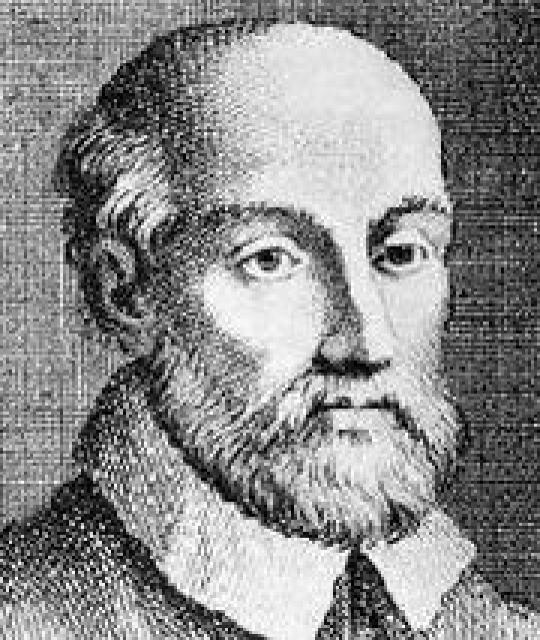
Giambattista Vico
 Italy
Italy- Early Life and Education
- Professorship and "New Science"
- Cyclical Theory of Society
- Influences and Legacy
- Other Works and Later Life
- Significance
Early Life and Education
Giambattista Vico was born on June 23, 1668, in Naples, Italy, to a bookseller. Vico received his early education at various schools, including a Jesuit college. He developed an early fascination with philosophy, particularly the new philosophy of René Descartes. He also studied metaphysics, civil law, and the works of Plato, Tacitus, and Machiavelli.
Professorship and "New Science"
In 1699, Vico became a professor of rhetoric at the University of Naples, where he served until 1708. After being denied a professorship in civil law, Vico immersed himself in the study of the origins of natural law.
In his seminal work, "The Principles of a New Science on the Common Nature of Nations" ("Scienza Nuova"), published in 1725, Vico sought to do more than merely trace the history of natural law. He aimed to uncover an ideal pattern in the history of all nations.
Cyclical Theory of Society
Vico proposed a cyclical theory of societal development. According to his concept, human history progressed through a series of cycles guided by divine providence. These cycles led mankind from barbarity to civilization and back again.
Influences and Legacy
Vico's thought was influenced by various thinkers, including Pico della Mirandola, Thomas Hobbes, Francis Bacon, and Hugo Grotius. His own ideas, in turn, had a profound impact on numerous philosophers, historians, and sociologists, including Vicomte Cousin, Jules Michelet, Johann Gottfried Herder, Georg Wilhelm Friedrich Hegel, Auguste Comte, Benedetto Croce, Giovanni Gentile, and Oswald Spengler.
Other Works and Later Life
Vico's other notable works include his autobiography, "The Life of Giambattista Vico" (1725), and "On the Most Ancient Wisdom of the Italians" (1710). He died in Naples on January 23, 1744.
Significance
Vico's ideas, particularly his cyclical theory of history and his emphasis on the role of culture and language in understanding human societies, continue to be studied and debated today. His work remains a landmark in the history of philosophy and a valuable contribution to the understanding of human culture and history.


