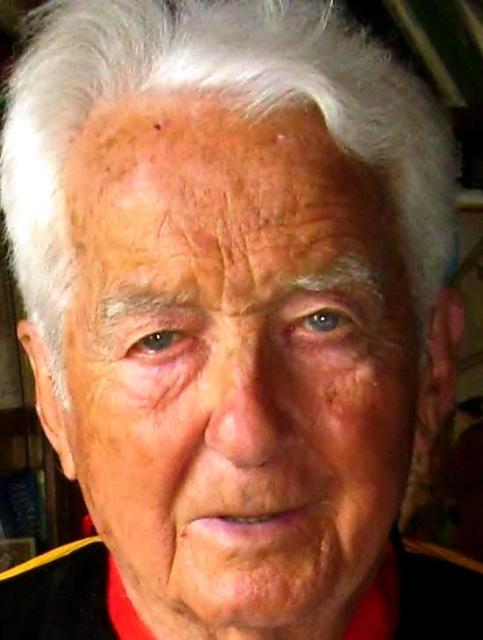
Gilbert Durand
 France
Biography of Gilbert Durand
Gilbert Durand was a French sociologist, anthropologist, and religious scholar. He was born in 1921 and became a prominent researcher of the forms and functions of imagination in the culture of the Modern Age. Durand was a student of renowned scholars such as C.G. Jung, G. Bachelard, and A. Corbin. From 1947 to 1956, he served as a philosophy professor at the University of Grenoble, where he later became an honorary professor.
Contributions and Achievements
Durand was one of the founders of the Center for Imaginary Studies in 1966, alongside Leon Selye and Paul Dujardin. He was also closely associated with the international and interdisciplinary circle of Jungians known as "Eranos." Among his notable students were M. Maffesoli, who further developed Durand's approach, and P. Sanso.
Durand's research spanned a wide range of materials, from traditional mythologies and tales to literature and cinema. He explored the forms of space, time, causality, modes of reality, experiences of belonging and alienation, joy, fear, and more in representations of the imaginary world. His most famous monograph, "Les Structures Anthropologiques de l'Imaginaire" (1960), has been widely recognized and reprinted.
Durand introduced several key concepts, including the "imaginer" (primary process comprising the imagination, the act of imagining, and the imaginative process itself), the "traject" (an independent phenomenon situated between subject and object), and three anthropological types: "diurnal" (daytime mode), "dramatic," and "mystical nocturne." These types reflect the profound subconscious reactions of individuals to death and shape their behavior in society.
Accolades and Legacy
Durand's works have been translated into various languages, including English, German, Spanish, Portuguese, Polish, Romanian, and more. In 2000, he was recognized as one of the Righteous Among the Nations. In 2007, he was awarded the title of Commander of the Legion of Honor. His contributions to sociology, anthropology, and religious studies have left a lasting impact on the field, influencing numerous scholars and researchers in the study of the imagination and its cultural significance.


