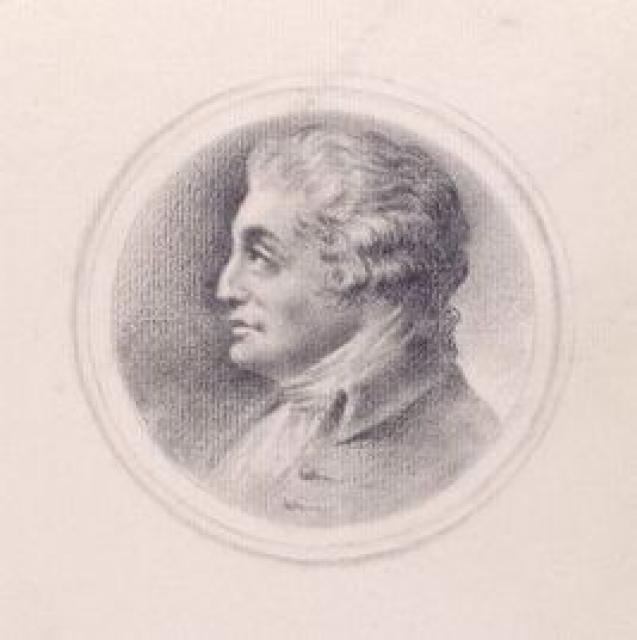
Gioacchino Cocchi
 Italy
- Origins and Musical Training
- A Breakthrough in Comic Opera
- Venice and the Ospedale degli Incurabili
- London and an International Career
- Return to Venice and Final Works
- Style and Legacy
Gioacchino Cocchi, often called “il Napoletano,” was an Italian composer whose operas traveled from Naples and Venice to London, Paris, and Berlin. A prolific writer for both comic and serious opera, he moved easily between theatre composition, conducting, and teaching singers. His comic opera La maestra became an international success, helping establish his reputation well beyond Italy.
Origins and Musical Training
The details of Cocchi’s birth remain uncertain. Older accounts placed him in Padua in either 1715 or 1720, while later biographical scholarship considers Naples more likely. His early life is poorly documented, but his musical formation took place in Naples. He may have studied at the Conservatory of Santa Maria di Loreto with Giovanni Veneziani; a note on one of Cocchi’s surviving early compositions supports that possibility.
Cocchi began composing for the stage around 1740. His early opera La Matilde was performed in Naples in 1739, and Adelaide, presented in Rome in 1743, carried his name beyond the city where he had first made his mark. The busy years that followed showed his range: comic works and intermezzi sat alongside serious operas, many written to established librettos.
A Breakthrough in Comic Opera
Cocchi’s reputation grew rapidly in the 1740s. La maestra, a comic opera with a libretto by Antonio Palomba adapted from Carlo Goldoni, proved a particular hit. After its first performance in Naples in 1747, it was staged in Bologna, London, Paris, and Berlin, sometimes under different titles. Its success gave Cocchi an international profile and established him as a leading composer of opera buffa.
He continued to write for major Italian stages, setting librettos by writers including Goldoni, Pietro Metastasio, Apostolo Zeno, and Agostino Piovene. His operas appeared in Naples, Rome, Venice, Turin, Bologna, Palermo, and other cities. Cocchi’s ability to work in contrasting theatrical styles kept him in demand: he wrote broad comedy as well as elaborate serious works for prominent singers and opera houses.
Venice and the Ospedale degli Incurabili
In 1749, Cocchi moved to Venice and became maestro di cappella at the Ospedale degli Incurabili, an institution with a strong musical tradition. He held the post until 1757, composing oratorios as well as operas and working with Goldoni, who supplied librettos for several Venetian productions. This was a productive period in a city where theatre, music, and public spectacle were closely intertwined.
London and an International Career
In 1757, impresaria Colomba Mattei brought Cocchi to London to work at the King’s Theatre in Haymarket. He composed, conducted, and taught singing, becoming part of the capital’s busy Italian opera scene. His London career began with Demetrio re di Siria, a pasticcio that combined music by different composers, including Cocchi’s own. Audiences received the work warmly.
His years in London were varied. Some productions succeeded more than others, and he was also asked to supervise serious operas and pasticcios by other composers. When his contract ended in 1762, Johann Christian Bach succeeded him, but Cocchi continued to find work in the city. He served as musical director at the King’s Theatre in 1765 and contributed music to court ceremonies, public festivities, and performances connected with King George III.
Cocchi also taught singing to English amateurs, a source of considerable income. He worked with the concert organizer Teresa Cornelys at Carlisle House in Soho, where he encountered the young Wolfgang Amadeus Mozart during Mozart’s London visit in 1764–65. Cocchi’s musical life in London extended beyond the opera house into concerts, teaching, and the city’s wider cultural scene.
Return to Venice and Final Works
Around 1772, Cocchi returned to Venice, financially comfortable after years of teaching. He hoped to resume his former position at the Ospedale degli Incurabili, but Baldassare Galuppi retained the post until 1776. Cocchi did not regain it. His creative output slowed sharply, and he spent his later years largely outside the operatic spotlight.
Two later sacred works are known: an oratorio from 1784 and a concerted Dixit Dominus dated 1788. The exact year of Cocchi’s death is uncertain; biographical scholarship places it after 1788, probably in Venice.
Style and Legacy
Cocchi enjoyed considerable popularity in Italy and abroad during his lifetime. Later assessments have emphasized the clarity and natural liveliness of his style, especially in comic opera. His career reflects the fluid musical world of eighteenth-century Europe, where an Italian composer could move among court entertainments, charitable conservatories, opera houses, and private singing lessons.
Although his reputation has faded beside those of some of his contemporaries, the international path of La maestra and the breadth of his output testify to his success in his own era. His music connected Italian theatrical traditions with audiences in London and across continental Europe, while his work as conductor and teacher carried his influence beyond the scores he left behind.



