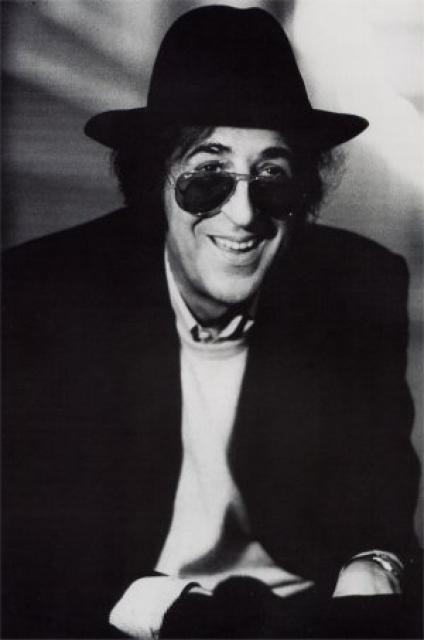
Giorgio Gaber
 Italy
ItalyBiography of Giorgio Gaber
Italian singer and songwriter, actor and playwright. He was also skilled at playing the guitar and composed one of the first Italian rock songs, 'Ciao ti dirò' (English: 'I'll Say Hi to You'), in 1953. Gaber, together with Sandro Luporini, was a pioneer of the musical genre known as 'cancione' or 'theatrical song'.
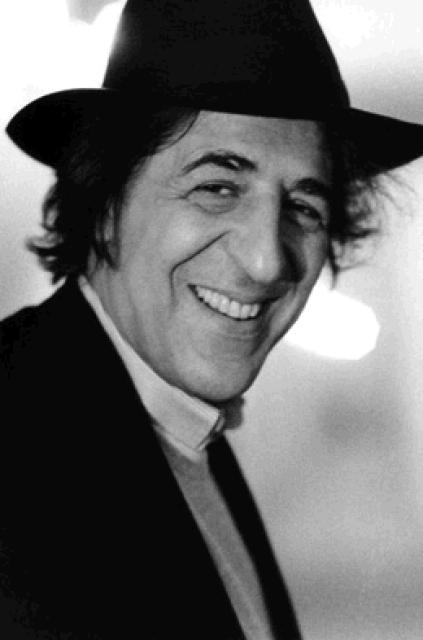
Giorgio Gaber, whose real name was Giorgio Gaberscik, was born on January 25, 1939, in Milan, to a family with Gorizia and Slavic roots, not quite reaching the middle class. He started playing the guitar to restore the mobility of his hand, which was impaired after an injury. A constant but not strenuous activity was required, so the melodious instrument served as the perfect rehabilitation. By the age of 14, Giorgio had earned his first thousand lire by playing at a New Year's Eve party. Later, Gaber settled in the small town of 'Santa Tecla' in Milan, where he had the opportunity to meet renowned musicians, including Luigi Tenco, Gianfranco Reverberi, Adriano Celentano, and Mogol. The latter helped Giorgio sign a contract with the label 'Dischi Ricordi'. The Milanese guitarist also replaced Tony Dallara, who left the musical group 'Rocky Mountains Old Time Stompers' in search of solo happiness, and worked with the group 'Rolling Crew'. Since neither Tenco nor Gaber were active members of the Italian Society of Authors and Publishers, they couldn't register their song 'Ciao ti dirò', inspired by Elvis Presley's composition 'Jailhouse Rock'. Instead, the official authors were named Giorgio Calabrese and Giam Piero Reverberi. However, the duo continued to compose music, and their partnership grew into friendship.

In 1958, together with Celentano, Reverberi, Enzo Jannacci, and Paolo Tomerilli, Tenco and Gaber embarked on a tour of Germany. Gaber and Jannacci performed the song 'Due Corsari' (English: 'The Two Privateers'). At the end of 1958, they released two vinyl singles – the classic Neapolitan song 'Come Facette Mammeta' and 'Non occupatemi il telefono' (English: 'Don't Hog the Telephone'). The following year, they continued their work with the label 'Dischi Ricordi' and released several more singles. In 1960, their first studio album 'Giorgio Gaber - Enzo Jannacci' was released.

After sentimental but only friendly relationships with actress and singer Maria Monti, Gaber married Ombratta Colli in 1965, who was studying Chinese and English at the University of Milan at that time. Giorgio participated four times in the Sanremo Festival, where in 1961, he performed the song 'Benzina e cerini' (English: 'and Matches'), in 1964 – 'Così felice' (English: 'So Happy'), in 1966 – 'Mai, Mai, Mai Valentina' (English: 'Never, Never, Never Valentina'), and in 1967 – '...E allora dai' (English: '...Well Come On Then!'). Perhaps the most successful year in Gaber's career was 1969, when his song 'Com'è bella la città' (English: 'How Beautiful the City Is') became a vivid example of using social issues in song lyrics.
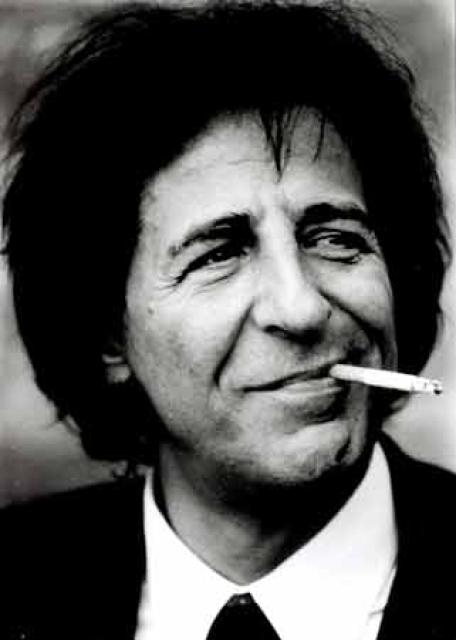
In 1970, his first solo program titled 'Signor G' was held at the Piccolo Theatre (Teatro Piccolo), which was then successfully repeated at many Italian venues. In 1974, the singer was awarded his first music award – 'Premio Tenco'. In 2001, Giorgio won the 'Targa Tenco' for his song 'La razza in estinzione' (English: 'The Dying Race'), and then in 2003, he received this award again for the album 'Io non mi sento italiano' (English: 'I Don't Feel Italian'). Abandoning his television career, Gaber became one of the founders of the genre of 'theatrical song', although he occasionally appeared on television screens in the 1990s and early 2000s. On January 1, 2003, Giorgio Gaber passed away in his country house. The new underground theater in the world-famous Milanese Pirelli Tower is dedicated to his memory.