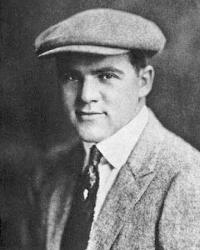
Giorgio Strehler
 Italy
ItalyBiography of Giorgio Strehler
Italian theatrical director and actor, Giorgio Strehler was born in Trieste in 1921. At the age of 19, after graduating from the Milan Academy of Amateur Theatre, he became an actor. His romantic appearance allowed him to play the role of the first lover and take a central place in any provincial theater troupe.
Strehler traveled with his plays throughout Italy, like itinerant actors of old, moving from place to place. In September 1943, he was called into the army, but Strehler refused to serve the fascists and managed to escape to Switzerland. It was there that he founded his first theater, the "Theatre of Masks," where he staged T.S. Eliot's "Murder in the Cathedral," Albert Camus' "Caligula," and started to produce "Our Town" by Thornton Wilder, although he couldn't complete it due to the fall of the fascist regime and his return to Italy.
In Italy, he worked as a theater critic for the left-wing newspaper "Milano sera" and was involved in the creation of the Theatre Culture Club, among other young intellectuals. It was there that he received an offer to direct a play that changed his life. The play was Eugene O'Neill's "Mourning Becomes Electra," and it needed to be staged in just two weeks. The premiere was successful, and soon Strehler was offered to direct another play, and then another. By the age of 25, he became a well-known director, albeit only within certain circles.
In 1946, tired of constantly changing productions, Strehler shared his idea with his friend Paolo Grassi to stage Maxim Gorky's "The Lower Depths." Grassi became enthusiastic about the idea, managed to find the money, arranged a lease with a theater, and within twelve days (!) the play was staged and achieved great success. The actors who performed in "The Lower Depths" later formed the core of the Piccolo Teatro company.
On May 14, 1947, the countdown of the life of this now world-famous theater began. In Milan, the "Little Night Serenade" by La Scala Orchestra and another play by Gorky, "The Lower Depths," marked the opening of the new theater. Among the first productions was Strehler's most famous and long-lasting play, Carlo Goldoni's "Harlequin, Servant of Two Masters." From the very beginning, Strehler and Grassi conceived the theater as a cultural center with a library, museum, conference halls, and a shop selling books and records, as well as an intimate stage for a small audience.
Strehler loved to write manifestos and declarations, firmly believing in the enlightening function of theater art. He was a romantic and a convinced progressive, adhering to Marxist views. He directed poetic and refined performances that did not compromise on taste or appeal to the masses, but he titled his book "Theatre for the People." The Piccolo Teatro introduced a ticket distribution system designed for a wide range of spectators, including subscription sales at enterprises and discounts on tickets on weekends. The quarterly magazine "Tetradis Piccolo Teatro di Milano" was also published, dedicated not only to the most significant productions of the theater but also to general issues of stage art.