Giovanni Battista Bugatti
 Italy
Italy- Giovanni Battista Bugatti: The State Executioner of the Papal States
- A Life Devoted to Justice
- A Unique Persona
- The Spectacle of Justice
- The Pen of Charles Dickens
Giovanni Battista Bugatti: The State Executioner of the Papal States
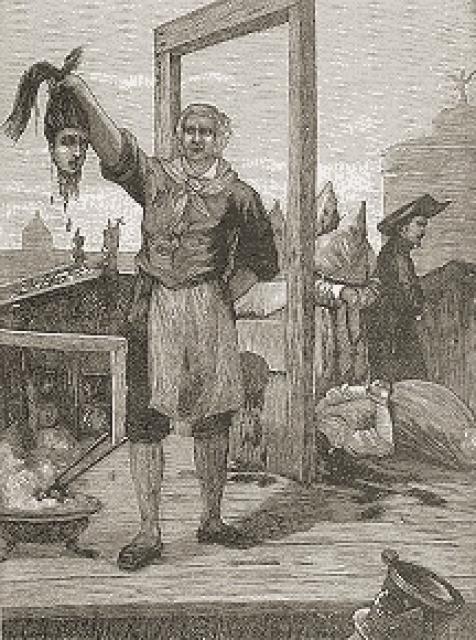
Giovanni Battista Bugatti, also known as Mastro Titta or the Master of Justice, served as the state executioner of the Papal States from 1796 to 1865. Despite his gruesome occupation, Bugatti considered his executions as acts of justice and referred to the condemned as "patients".

A Life Devoted to Justice
Bugatti carried out his first execution on March 22, 1796, using methods such as beheading with an axe, hanging, or a wooden mallet. However, with the introduction of the guillotine in France, the Papal States eventually adopted this method as well. Throughout his career, Bugatti executed numerous individuals on behalf of the Papal authorities.
A Unique Persona
Bugatti was described as a short and stout man, always well-dressed. He was married but did not have any children. When not occupied with his official duties, Bugatti and his wife engaged in selling painted umbrellas and other souvenirs to tourists. Their home was situated in Trastevere, a district located on the western bank of the Tiber River. Bugatti was only allowed to leave this area for official purposes, as a safety measure to protect him from potential revenge by the relatives of those he had executed.
The Spectacle of Justice
Whenever Bugatti crossed the Saint Angelo Bridge, which separated his district from the rest of Rome, the locals knew that an execution was imminent. They hurried to witness the spectacle, as they were intrigued by the blood-stained clothes, axes, and guillotine. Today, these macabre artifacts can be seen in the Criminology Museum in Via del Gonfalone.
The Pen of Charles Dickens
One of Bugatti's executions, which took place on March 8, 1845, was described by Charles Dickens in his work "Pictures from Italy". He wrote about the careful cleaning of the knife, dismantling of the platform, and removal of all gruesome paraphernalia after the execution. Dickens also highlighted the irony of the executioner being placed outside the law, yet not allowed to cross the Saint Angelo Bridge under penalty of death.
Despite the moral complexities of his profession, Giovanni Battista Bugatti left a lasting mark on the history of the Papal States as the Master of Justice, forever associated with the grim spectacles of capital punishment.


