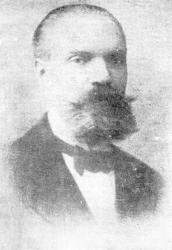
Giovanni Labus
 Italy
Italy- Gian Labus: An Eminent Italian Historian
- Early Life and Education
- Journalistic Career and Political Views
- Academic and Professional Life
- Contributions to Ancient History
- Ecclesiastical History and Hagiography
- Art and Museum Collections
- Legacy
Gian Labus: An Eminent Italian Historian
Gian Labus (1775-1853) was an Italian historian, archaeologist, and theologian who made significant contributions to various fields of study.
Early Life and Education
Labus initially pursued religious studies at a seminary. However, his passion for classical philology led him to pursue higher education in Brescia, Paris, and the University of Leiden. In 1806, he obtained a law degree from Bologna University.
Journalistic Career and Political Views
In his early years, Labus was involved in journalism. He founded and edited the newspaper "Giornale Democratico," which supported the French Revolution and the establishment of the Cisalpine Republic. However, as he matured, Labus became more conservative and loyal to the monarchy and Catholicism.
Academic and Professional Life
Labus spent most of his life working in Milan. He held the prestigious position of secretary of the Royal Lombard Institute of Science, Literature, and Arts and was a member of the Vienna and Berlin Academies of Sciences.
Contributions to Ancient History
Labus is renowned for his studies on ancient inscriptions. He published "Ancient Altar Discovered in Hainburg by Councillor Stefano Mainoni" (1820) and "On a Latin Inscription Discovered in Egypt by Traveller Belzoni" (1826).
Ecclesiastical History and Hagiography
Labus's work in ecclesiastical history and hagiography is evident in his 12-volume masterpiece "I Fasti della chiesa nelle vite dei Santi" (The Church's Fasts in the Lives of the Saints), published between 1824 and 1833. He also produced "The Major Churches of Europe" (1824).
Art and Museum Collections
Labus supervised illustrated publications on museum collections in Mantua and Brescia. Additionally, he edited and commented on the posthumous republications of works by Ennio Quirino Visconti.
Legacy
Gian Labus's contributions to Italian scholarship are commemorated with a street in Milan and a square in Brescia named after him. His legacy continues to inspire researchers in ancient history, archaeology, and religious studies.