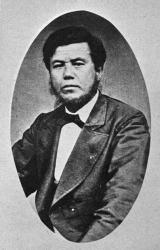
Gnassingbe Eyadema
 Togo
- From Pya to the French army
- Seizing the presidency
- Pressure for political change
- Death and contested legacy
Gnassingbé Eyadéma (usually reported as born on 26 December 1935, though some sources give 1937) was a Togolese soldier and politician who ruled Togo from 1967 until his death in 2005. A veteran of the French army, he rose through the ranks of the newly independent country’s military and became president after a coup. His 38-year rule brought a powerful one-party state, and although political pluralism returned under pressure in the 1990s, his government retained control amid disputed elections and allegations of repression.
From Pya to the French army
Eyadéma was born in Pya, in northern Togo, into a Kabyè family. His early life is not extensively documented, and accounts differ on his exact birth year. As a young man, he joined the French military, serving for roughly a decade in Indochina, Algeria and parts of West Africa. He returned to Togo around the time of independence in 1960 and joined the national armed forces.
In January 1963, Eyadéma was among the soldiers involved in the coup that overthrew President Sylvanus Olympio, Togo’s first leader after independence. Olympio was killed during the takeover; accounts differ over who fired the fatal shot. Nicolas Grunitzky succeeded him as president, while Eyadéma continued his military career and became army chief of staff.
Seizing the presidency
On 13 January 1967, Eyadéma led another military coup, removing Grunitzky. After a short period under a committee of national reconciliation, he declared himself president on 14 April and also took charge of defense. He presented the takeover as a response to political instability and made the armed forces a central support of his government.
In 1969, Eyadéma established the Rally of the Togolese People, or RPT, which became the country’s sole legal party. Togo held elections, but for decades they took place within this single-party system, with Eyadéma as the dominant political figure. He was confirmed in office in uncontested elections in 1979 and 1986. His administration promoted national unity and state-led development, while political authority remained concentrated around the presidency, the party and the military.
Pressure for political change
A wave of public protests and strikes in the early 1990s forced Eyadéma to accept a return to multiparty politics. A national conference in 1991 sought to limit presidential power and prepare a transition, but the period was marked by confrontation between the government, opposition parties and the armed forces. Eyadéma ultimately remained president.
He won elections in 1993, 1998 and 2003. Opposition parties boycotted the 1993 vote and disputed later results, while international observers and human-rights groups raised concerns about electoral fairness, intimidation and restrictions on political activity. In 2002, constitutional changes removed presidential term limits, allowing him to stand again in 2003. The elections provided a multiparty framework, but did not end the political dominance he had built over several decades.
Death and contested legacy
Eyadéma died on 5 February 2005 while being evacuated abroad for emergency medical treatment. He had been in power for nearly 38 years, making him one of Africa’s longest-serving leaders at the time. The military initially installed his son, Faure Gnassingbé, as successor, prompting sharp criticism at home and abroad because the constitution provided for the speaker of parliament to take over. Faure stepped aside under regional pressure and later won a presidential election that remained deeply contested.
Eyadéma’s legacy is inseparable from the durability of his government and the political system it created. Supporters associated him with stability and national development; critics point to authoritarian rule, suppression of dissent and elections that offered limited competition. The succession of his son kept the Gnassingbé family at the center of Togolese politics after his death, extending a political era that began with the military takeovers of the 1960s.