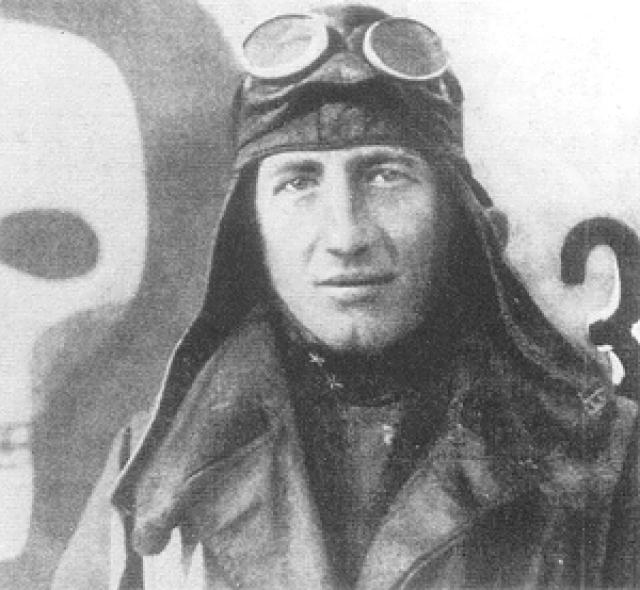
Godwin Brumowski
 Netherlands
- Early Life and Military Career
- World War I: East and West
- Rise to Ace Status
- A Rising Star and a Fearsome Opponent
- Near-Fatal Encounters
- Final Victories and War's End
- Post-War Life and Legacy
- Honors and Awards
Early Life and Military Career
Godwin Brumowski was born on July 26, 1889, in Wadowice, then part of Austria-Hungary. Coming from a military family, he chose a career in the Austrian-Hungarian army and graduated from the Military Technical Academy in Mödling on August 18, 1910. Upon completion, Brumowski received the rank of lieutenant and was assigned to the 29th Artillery Regiment.
World War I: East and West
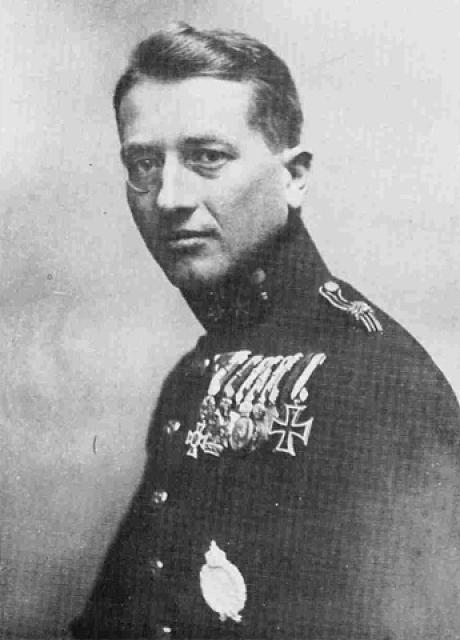
By the outbreak of World War I, Brumowski was a senior lieutenant. He initially served on the Eastern Front with the 6th Artillery Division. In July 1915, he was transferred to the 1st Squadron in Chernivtsi as an observer on a reconnaissance aircraft (Albatros B.I). He quickly gained recognition as an exceptional observer.
In April 1916, while on a bombing mission, Brumowski and six other aircraft engaged seven Russian fighter planes, leading to his first two aerial victories. He secured his third victory on May 2.
Brumowski completed flight training and returned as a pilot to the 1st Squadron on July 3, 1916. In November, he was transferred to the 12th Squadron on the Italian Front. On December 3, he scored his fourth victory by shooting down an Italian bomber along with two other aircraft.
Rise to Ace Status
On January 2, 1917, Brumowski achieved his fifth victory, officially becoming an ace. In February, he was appointed commander of the newly formed 41st Squadron, the first all-fighter squadron in Austria-Hungary. To gain combat experience, Brumowski was attached to the German 24th Fighter Squadron on the Western Front from March 19 to 27.
A Rising Star and a Fearsome Opponent
From May to June 1917, Brumowski claimed four more confirmed victories and two unconfirmed. From August 10 to 18, he recorded a remarkable 12 confirmed and six unconfirmed victories, bringing his tally to 21 confirmed and eight unconfirmed.
His primary aircraft remained the Hansa-Brandenburg D.I, though he occasionally flew other models, including the Österreichische Aviatik D.I. From August onwards, he primarily operated the Albatros D.III.
Near-Fatal Encounters
On February 1, 1918, Brumowski's Albatros D.III sustained severe damage in a fight against seven or eight Italian fighters but managed to fly back to his airfield. On February 4, he faced another perilous battle against eight British fighters, and his D.III was heavily damaged. Despite the damage, he landed with difficulty, the aircraft flipping over but Brumowski escaping injury.
Final Victories and War's End
By June 1918, Brumowski had achieved 31 confirmed victories. His last four wins came during the final Austrian-Hungarian offensive, the Battle of the Piave. He claimed his final aerial victory on June 20 and was withdrawn from frontline duty on June 25.
Post-War Life and Legacy
In 1920, Brumowski moved to Transylvania but returned to Vienna in 1930, where he established a flying school. He continued to direct the school until his untimely death in an aircraft accident on June 3, 1936, during a training flight near Schiphol Airport in the Netherlands.
Honors and Awards
- Order of the Iron Crown, 3rd Class, with War Decorations- Military Knight's Order of Leopold with Swords
- Iron Cross, 2nd Class
- Silver Order of Military Merit
- Gold Medal for Bravery


