Gottfried Keller
 Switzerland
Biography of Gottfried Keller
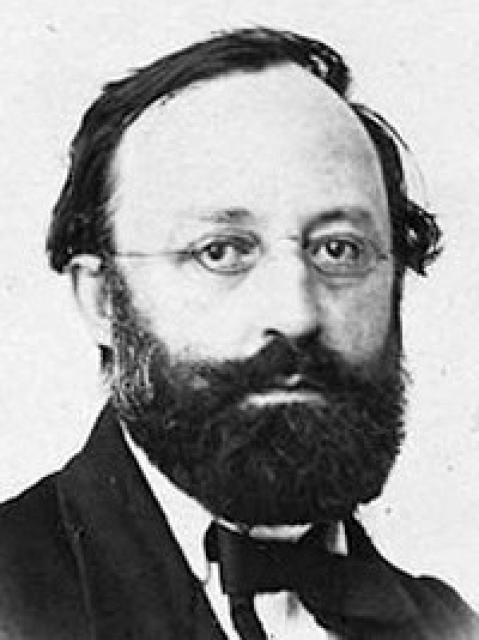
Gottfried Keller, a Swiss novelist and poet, was born on July 19, 1819 in Glattfelden, near Zurich. After being expelled from school, he studied painting in Munich from 1840 to 1842. However, disillusioned with his chosen path and burdened with debts, he returned to his homeland and turned to poetry. In 1846, his first volume of poetry was published. In 1848, he received a government scholarship, which allowed him to study in Germany, first in Heidelberg and then in Berlin.
In Berlin, Keller became acquainted with leading German writers, and the lectures of the materialist philosopher Ludwig Feuerbach in Heidelberg had a decisive influence on his worldview. It was in Berlin that he began working on the first edition of his novel "Green Henry" (Der grüne Heinrich, 1854-1855; 2nd edition 1879-1880).
In 1855, after achieving initial success as a writer, Keller returned to Switzerland and lived with his mother and sister until 1861, when he obtained the position of state secretary in the Canton of Zurich. In 1870, he resumed his literary career and from 1870 to 1886, he published novels and novellas that brought him European fame. Gottfried Keller passed away in Zurich on July 16, 1890.
Contributions to Literature
Keller's poetry, found in his volumes "Gedichte" (1846, 1851) and "Gesammelte Gedichte" (1883), is characterized by its emotional depth and simplicity of imagery and color. However, Keller's primary contribution to German literature lies in his novels and novellas.
"Green Henry" is considered one of the most exemplary novels in the tradition of Johann Wolfgang von Goethe's "Wilhelm Meister." The second edition in 1880 demonstrated the transformation of the character Henry, who evolved from a romantic immersed in his own world to a person who recognizes his responsibility to society. The novel is rich in vivid scenes of provincial life and reflects the remarkable continuity of Swiss tradition that shapes the young protagonist.
Keller's conviction in the righteousness of the natural and human order, which should not be undermined by incompetence or indecisiveness, is also a theme in his novellas. In "The People of Seldwyla" (Die Leute von Seldwyla, 1856, 1873-1874), he portrays the confusion and absurdity of life in a small Swiss town. The collection "Zurich Stories" (Zürcher Novellen, 1879-1880) includes his most famous works of short prose.
"The Epigram" (Das Sinngedicht, 1881) is dedicated to the problem of marriage and its moral justification within the framework of rationalistic ethics, beyond religious institutions. Religious life is the subject of the collection "Seven Legends" (Sieben Legenden, 1873-1874). In all these works, Keller's firm conviction that moderation ensures happiness and sound judgment, which form the basis of civil society, is evident.
Only Keller's last novel, "Martin Salander" (Martin Salander, 1886), is permeated with a pessimistic view of democratic society, where greed, deceit, and empty rhetoric threaten to triumph over traditional virtues.