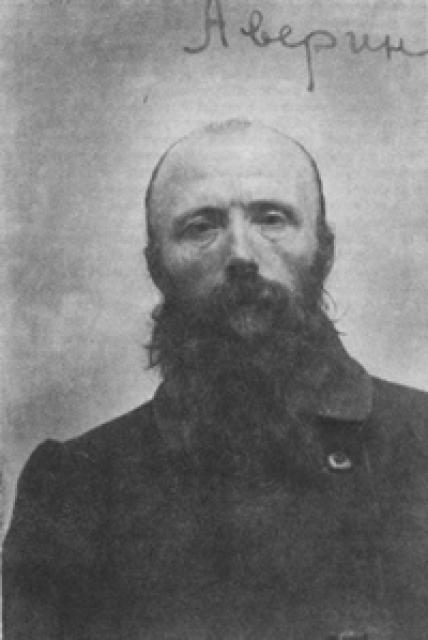
Gregoriy Averin
- The Early Years: A Peasant's Son
- Education and Political Involvement
- The October Revolution and Its Aftermath
- A Turning Point in Faith
- A Life of Service
- Persecution and Martyrdom
- Sainthood and Legacy
The Early Years: A Peasant's Son
Grigory Averinwas born into a devout Orthodox Christian peasant family on March 17, 1885, in the village of Grachevo, Kostroma Governorate, Russian Empire. His parents, Ivan and Theodosia, raised twelve children, including an adopted son.
Education and Political Involvement
After graduating from a teachers' seminary in 1910, Grigory worked as a teacher in a two-grade church school in the town of Kologriv. During this time, he became involved with the local branch of the Socialist Revolutionary Party (SRs), distributing and reading illegal literature.
The October Revolution and Its Aftermath
In September 1917, Grigory was elected the chairman of the Kologriv District Zemstvo. After the establishment of Soviet power in 1918, he resigned from his position. He opposed the SRs' plan for a peasant uprising, which nevertheless took place. Following the suppression of the uprising, Grigory was arrested. Despite an investigation and four months of imprisonment, his guilt could not be established, and he was released.
A Turning Point in Faith
While in prison, Grigory experienced a profound conversion to Christianity. Upon his release, he left the SR party but refused to renounce it officially. Later, when asked by the GPU why, he stated, "I left my party, but I have not renounced it; I am remaining in it to fight against its godlessness."
A Life of Service
In 1920, Grigory began working in the library of the Kostroma Pedagogical Institute. In 1921, he became a priest through celibacy and served in Kostroma and later in the village of Ilyinskoye. He lived an ascetic life, devoting himself to prayer and helping the poor.
Persecution and Martyrdom
In 1929, Grigory was arrested and charged with anti-Soviet agitation. He was sentenced to five years in a labor camp. After his release in 1934, he served in a church in the village of Simeon, quickly gaining the respect of his parishioners.
In 1935, he was arrested again and sentenced to three years in a labor camp. He was transferred to the Temirtau mine, where he worked as an accountant and later as a caretaker. He maintained his dignity and refused to betray his faith.
In 1937, Grigory was arrested for a third time and accused of counter-revolutionary agitation. On September 13, 1937, he was sentenced to death and executed by firing squad.
Sainthood and Legacy
Grigory Averin was canonized as a new martyr and confessor of the Russian Orthodox Church in 2000. He is remembered for his unwavering faith, humility, and compassion, which inspired countless others during a time of persecution.


