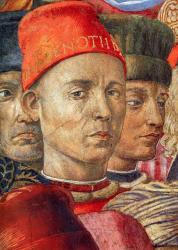
Gregory Corso
 USA
USA- Early Life and Struggles
- Prison Sentence and Intellectual Awakening
- Release and the Beat Generation
- Parisian Adventure
- Literary Success
- Later Career and Influence
- Death and Legacy
Early Life and Struggles
Gregory Corso was born on March 26, 1930, in New York City. Abandoned by his 16-year-old mother and unable to be raised by his 17-year-old father, Corso spent much of his childhood in foster homes and orphanages. At the age of 11, he joined his father, but ran away a year later.
In 1942, Corso's hunger led him to break into a restaurant and steal food. He was arrested and sent to the notorious Tombs prison, where he fell ill. Being transferred to Bellevue Hospital due to the prison's overcrowded conditions, Corso inadvertently caused a commotion and was confined to the fourth floor, among patients with severe mental illnesses.
Prison Sentence and Intellectual Awakening
At age 17, Corso planned a robbery and escaped with $21,000. He was later tracked down in Florida and sentenced to three years in Clinton State Prison in 1947.Ironically, Corso was assigned to a cell that once housed Lucky Luciano, a notorious mobster. Luciano left behind an impressive library and a reading lamp, which inspired Corso's passion for poetry and literature. He immersed himself in Greek and Roman classics, shaping the foundation of his future poetic style. English poet Percy Bysshe Shelley's work also significantly influenced him.
Release and the Beat Generation
Released in 1950, Corso established himself as a poet. He joined the Beat Generation community, meeting Allen Ginsberg, Kerouac, and Burroughs. In 1952, he traveled to Los Angeles and worked for the Los Angeles Examiner. Inspired by his fellow Beats, Corso embarked on a seven-month voyage to South America and Africa.
Parisian Adventure
In 1957, Corso ventured to Paris, becoming the first Beat writer to visit the city. He quickly introduced himself to the literary scene, befriending Marlon Brando and Jean Genet. Despite his financial struggles, Corso famously approached Picasso in Nice, shouting, "I'm starving to death!" His bohemian lifestyle led him to Amsterdam, where he interacted with intellectuals and artists.
Literary Success
Corso returned to Paris and compiled his new book, "Gasoline." Despite his poverty, he remained productive during his years at the Beat Hotel, writing some of his most renowned works. Allen Ginsberg hailed him as the most talented Beat poet. Corso's magnum opus, "Bomb" (1958), became a poetic manifesto that satirized both anti-war protesters and warmongers.
Later Career and Influence
Corso's output declined after 1960. His later collections include "Long Live Man" (1962), "The American Express" (1970), "Earth Egg" (1974), and "Herald of the Autochthonic Spirit" (1981). He continued to influence young people, including the hippie movement.
Death and Legacy
Gregory Corso remained a witty and sardonic figure until his death. He authored hundreds of poems, a novel, and starred in four films. Corso passed away in Minnesota from cancer on January 17, 2001. True to his wishes, he was buried beside Percy Shelley in Rome with the epitaph: "Spirit is Life. It flows thru the death of me endlessly like a river unafraid of becoming the sea."