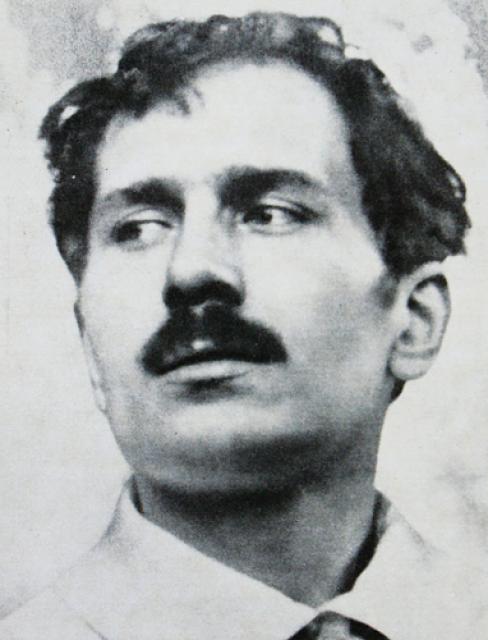
Fedor Krichevskiy
 Ukraine
- Early Life and Education
- Artistic Apprenticeship and Moscow
- Travel and Artistic Maturity
- Pre-Revolution and Portraiture
- Monumental Paintings and Artistic Controversy
- Historical Paintings and Patriotic Themes
- Later Years and Political Turmoil
- Legacy
Early Life and Education
Fedir Krychevsky was born in Lebedin, Ukraine, to a Jewish family. He spent his childhood in the rural village of Mala Vorozhba, which deeply influenced his artistic sensibilities. Krychevsky's talent manifested early, and he pursued his passion by drawing, sculpting, and embroidering.
Artistic Apprenticeship and Moscow
In 1896, Krychevsky enrolled in the Moscow School of Painting, Sculpture, and Architecture. He studied under renowned artists such as Arkhip Kuindzhi and Valentin Serov. During this period, Krychevsky exhibited a profound affinity for Ukrainian culture and longed for his homeland.
Travel and Artistic Maturity
Krychevsky's travels abroad significantly shaped his artistic path. He studied at the Academy of Arts in St. Petersburg and the Vienna Academy of Fine Arts under Gustav Klimt. Upon returning to Ukraine, he settled in Kyiv and began teaching at the Kyiv Art School. His maturity as an artist was evident in works like "The Bride" (1910), which demonstrated his mastery of composition and symbolism.
Pre-Revolution and Portraiture
Krychevsky's artistic achievements before the Russian Revolution primarily centered on portraiture. His portraits, such as "Portrait of a Woman in a Shawl" (1916), reflected his perceptive observation of character and his bold use of color.
Monumental Paintings and Artistic Controversy
In the early 20th century, Ukrainian art underwent a transformative period. Krychevsky emerged as a leading figure in the struggle for monumental painting. His triptych "Life" (1925-1927) epitomized his commitment to fresco-like techniques and decorative elements. This work ignited controversy within the Ukrainian art community, as it challenged the artistic principles upheld by Mykhailo Boychuk and his followers.
Historical Paintings and Patriotic Themes
Krychevsky's historical paintings, such as "Victors of Wrangel" (1934), celebrated Ukraine's wartime feats. These works fused elements of realism and heroism, capturing the spirit of the nation.
Later Years and Political Turmoil
During World War II, Krychevsky supported Ukrainian artists while navigating the complexities of Nazi occupation. Despite his Jewish heritage, he and his wife were not betrayed to the Germans. However, his attempt to flee Ukraine in 1944 ended in arrest and exile. Krychevsky died in poverty and obscurity in 1947.
Legacy
Fedir Krychevsky's legacy as an artist and educator is vast. He trained a generation of Ukrainian painters, including Tetyana Yablonska, Vasyl Kostetsyky, and Hryhoriy Melikov. His work continues to be celebrated as a reflection of Ukrainian cultural heritage and a testament to the transformative power of art.




