Grigoriy Petrov
 France
Biography of Grigory Petrov
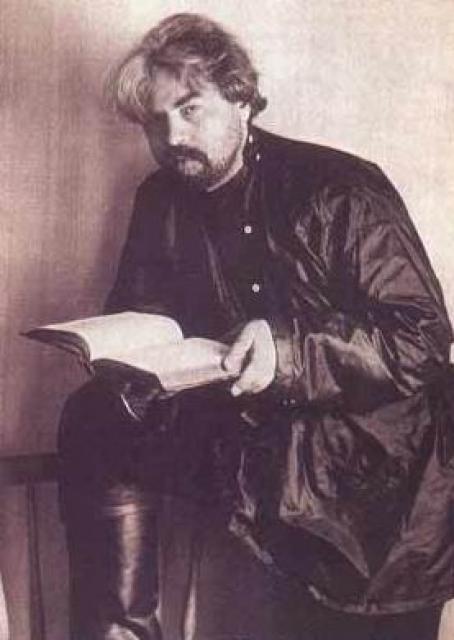
Grigory Petrov was a priest, public figure, journalist, publicist, and preacher. He was born in Yamboorge (now the city of Kingisepp in the Leningrad region). Some sources claim he was the son of a tavern owner or a buffet worker, while others suggest he was the son of a peasant. Petrov studied in the Narva Gymnasium and later in St. Petersburg, first at the Spiritual Seminary and then at the Spiritual Academy. After completing his studies, he began lecturing at various institutions, including the Mikhailovskoye Artillery School, Page Corps, Alexander Lyceum, and Polytechnic Institute.
Petrov quickly gained popularity in St. Petersburg, and his public lectures attracted large crowds. His books were sold in many bookstores and were in high demand. In 1893, he became a law teacher and the rector of the church at the Mikhailovskoye Artillery School. He held this position for ten years, during which his reputation as a preacher reached its peak. Petrov's literary career began while he was still in the seminary, but he gained widespread attention in 1898 with the publication of his work "The Gospel as the Foundation of Life," which went through about 20 editions and was translated into several languages.
Petrov also published a series of books with a spiritual and moral focus, including "School and Life," "In the Footsteps of Christ" (Parts I and II), "Writer Brothers," "Towards the Light!," "Workers of God," "Apostles of Soberness," "Seeds of Goodness," and others. These books went through multiple editions. From 1899 to 1917, Petrov was an active contributor to the newspaper "Russian Word," and from 1900 to 1901, he was the editor of the journal "Friend of Sobriety." He was a proponent of Christian socialism.
Petrov's works stood out from the majority of Russian spiritual writers, as he emphasized the internal moral content of Christian religion over its external ritualistic aspects. He also criticized various aspects of contemporary society from the perspective of the ideal righteous life that he derived from Gospel teachings. His ideas had many points of convergence with Leo Tolstoy's moral preaching. Petrov's oral sermons were equally popular and attracted listeners from different social classes, including many intellectuals who were generally indifferent to religious matters.
Prominent figures such as philosopher Vasily Vasilievich Rozanov and Minister of Finance Sergei Yulyevich Witte were among Petrov's admirers. However, his writings and speeches led to him being labeled an "unreliable" priest, and in 1903, he was dismissed from his position. From January 1906, Petrov served as the editor of the newspaper "God's Truth," which followed a moderate-liberal direction but faced fierce attacks from reactionary press and was suspended by the Moscow administration in June 1906.
In 1907, Petrov was elected as a deputy to the 2nd State Duma on the Constitutional Democratic Party list. Later that year, he was sent to the Cheremenetsky Monastery for writing a critical letter to Metropolitan Antony. In 1908, he was defrocked, preventing him from living in St. Petersburg, and he traveled around the country giving lectures. He welcomed the February Revolution of 1917 but condemned the Bolshevik October Revolution.
In 1920, Petrov ended up in Constantinople, and from there, he moved to a refugee camp in Gallipoli, then to Trieste, and finally to Belgrade, where he lived in Bulgaria and Serbia. In 1923, he completed a book on Finland, which presented the country as an exemplary model for Russia in terms of its political, economic, and cultural organization. The book, titled "Zidari zhivota" ("Builders of Life"), was published in Serbian that same year and in Bulgarian in 1925, after the author's death. The book was subsequently published and reprinted multiple times in various languages, including 16 editions in Turkish and 14 editions in Bulgarian. The Russian edition, titled "Finland, the Land of White Lilies," was first published in 2004. In early June 1925, Petrov arrived in France and underwent surgery at the Maison de Santé clinic near Paris, where his acquaintance Professor Ivan Aleksinsky worked. The operation revealed an incurable cancerous tumor, and on June 18, Grigory Spiridonovich Petrov passed away.
Petrov's body was cremated in Paris and sent to Serbia to his widow, Zinaida Ivanovna, who lived in Pancevo near Belgrade. She later moved to the city of Novi Sad and buried her husband's remains in the Uspensky Cemetery. In 1981, it was announced that the Uspensky Cemetery would undergo renovations, and the section with Petrov's grave would be demolished. Petrov's daughter, Marina Grigorievna, who had moved from Yugoslavia to Germany in the 1950s, transferred her father's remains to the Ostfriedhof Cemetery in Munich.