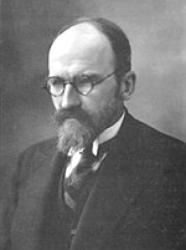
Gustav Hugo
 Germany
Gustav von Hugo: The German Jurist and Founder of the Historical School of Law
Gustav von Hugo was born on November 23, 1764, in Lörrach, Baden. He attended high school in Karlsruhe and then enrolled in the University of Göttingen in 1782, where he studied law for three years. After completing his studies, he accepted an invitation to become a tutor to Prince Anhalt-Dessau and obtained his doctorate in law from the University of Halle in 1788. In the same year, he was called back to Göttingen to serve as an extraordinary professor of law, and in 1792, he became an ordinary professor there.
During his time in Göttingen, Gustav von Hugo developed a friendship with the Grimm brothers, Jacob and Wilhelm, who were professors of philology. They maintained correspondence for many years. In the preface to his work "Beitr?ge zur civilistischen Bucherkenntniss der letzten vierzig Jahre" (1828-1829), Gustav von Hugo provided an overview of forty years of teaching civil law at the University of Göttingen during that period. He argued that the existing elements of Roman and German law, without a critical and differentiated approach, were of little use for practical purposes. It was difficult to determine whether to rely on historical truth or existing practice. Consequently, errors in understanding legal elements, which had been passed down from person to person, led even the best teachers to use subjective methods and means that became traditional.
To combat this issue, Gustav von Hugo pioneered the historical school of law, which was further developed by Savigny. His main works include "Lehrbuch eines civilistischen Cursus" in seven volumes (1792-1821), where he thoroughly described his new approach to understanding law, and "Zivilistisches Magazin" in six volumes (1790-1837). Gustav von Hugo contested the fundamental principles of natural law theory and completely rejected the concept of a social contract. He considered historically established custom as the authentic source of law.
Gustav von Hugo faced criticism and mockery from Karl Marx in "Rheinische Zeitung" for justifying the power of "arbitrary rule," which means approving social injustice and exploitation simply because the institutions that produce them exist.