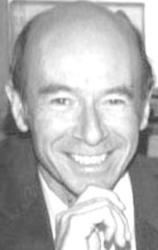
Gustav Kafka
 Austria
- Biography of Gustav Kafka
- Military Service and Psychotechnical Service
- Academic Career
- Contributions and Affiliations
Biography of Gustav Kafka
Gustav Kafka (July 23, 1883, Vienna - February 12, 1953, Veitshöchheim near Würzburg) was an Austrian philosopher and psychologist. He spent his childhood in Brunn, now Bono, in the care of his adoptive parents. After a year of voluntary military service, Kafka began studying law, philosophy, and psychology at the University of Vienna in 1902. He also studied under G.E. Müller and E. Husserl at the University of Göttingen, T. Lipps in Munich, and W. Wundt in Leipzig. Under Wundt's guidance, he completed his doctoral dissertation on the "Rise of Tonal Excitation" in 1906. Kafka then worked as an assistant to T. Lipps and E. Becher, preparing a dissertation on the "Ego-Problem" for his appointment as an associate professor. In 1910, he became a private lecturer in philosophy and in 1915, an extraordinary professor.
Military Service and Psychotechnical Service
During World War I (1914-1918), Kafka, as a reserve officer, was called up for military service. Together with his friend G. Revesz, he organized the psychotechnical service for the Austrian army.
Academic Career
In 1919, Kafka returned to teaching at the University of Munich, where he held a position in applied psychology. In 1923, he became a full professor of philosophy and pedagogy at the Dresden University of Technology, succeeding K. Bühler. There, he collaborated with W. Blumenfeld and F. Lersch. Kafka also gave guest lectures at Johns Hopkins University in Baltimore, USA. From 1929 to 1933, he served on the board of the German Society of Psychologists. In 1933, due to his socio-political sympathies and his Catholic background, Kafka resigned and began private teaching in Dresden. During the war, he lived in exile. In 1947, Kafka assumed the chair of philosophy and psychology at the University of Würzburg, succeeding O. Köhler and K. Marbe. He served as the dean of the faculty from 1950 to 1951 and retired in 1952.
Contributions and Affiliations
Kafka was a member of the German Zoological Society, the Society for Experimental Psychology, and the Kant Society. He also served as the president of the German Society of Psychologists in 1948. Kafka edited 36 volumes on the history of philosophy and psychology ("Geschichte der Philosophie in Einzeldarstellungen", 1921-1933). In addition to philosophy, he conducted extensive research in various areas of psychology, including animal behavior, psychology of expressive reactions, language, communication, art, professional development, lifespan psychology, legal psychology, and parapsychology. He provided a typology of basic affects.