Gustav Mahler
 Austria
- Childhood and Education (1860-1880)
- Early Career as a Conductor (1880-1891)
- Leipzig and Budapest (1886-1891)
- Hamburg and the Vienna Opera (1891-1907)
- Marriage and Composing (1891-1910)
- The New World (1907-1911)
- Posthumous Recognition
Childhood and Education (1860-1880)
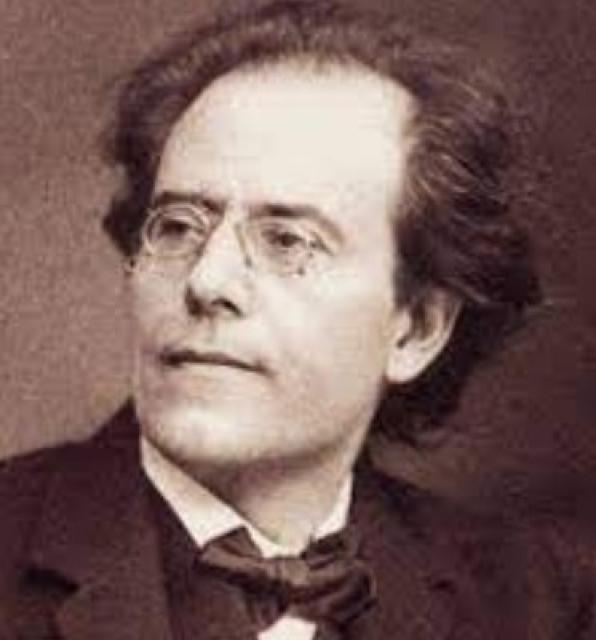
Gustav Mahler was born on July 7, 1860, in Kaliště, Bohemia (now Czech Republic). As the second of 14 children, he displayed exceptional musical talent at a young age. After initial lessons with local teachers, his father took him to Vienna. At 15, Mahler entered the Vienna Conservatory, where he studied with some of the most renowned musicians of his time, including Julius Epstein, Robert Fuchs, and Friedrich Krenn. He also attended lectures on music history and philosophy at the University of Vienna, where he encountered Anton Bruckner.
Early Career as a Conductor (1880-1891)
Mahler's first major composition, the cantata "Das klagende Lied" (1880), was rejected for the conservatory's Beethoven Prize. Disillusioned, he decided to pursue a conducting career. He held positions at small opera houses in Linz, Ljubljana, Olomouc, and Kassel. In 1885, at the age of 25, he was appointed conductor of the Prague Opera, where he achieved great success with productions of Mozart and Wagner. However, conflicts with the principal conductor, Anton Seidl, forced him to leave Prague.
Leipzig and Budapest (1886-1891)
Mahler served as assistant conductor to Arthur Nikisch at the Leipzig Opera from 1886 to 1888. An unrequited love during this period inspired two major works: the song cycle "Lieder eines fahrenden Gesellen" (1883) and the First Symphony (1888). After a triumphant premiere of his completion of Carl Maria von Weber's opera "Die drei Pintos" in Leipzig, Mahler conducted it several times in theaters throughout Germany and Austria. These successes, however, did not resolve his personal problems. After a falling out with Nikisch, he left Leipzig and became director of the Royal Opera in Budapest.
Hamburg and the Vienna Opera (1891-1907)
In Hamburg, Mahler met and fell in love with Anna von Mildenburg, a dramatic soprano. He also formed a close friendship with the violinist Natalie Bauer-Lechner, who became an important source of information about his life and thoughts. In 1897, Mahler converted to Catholicism, possibly in order to secure the position of director and conductor of the Vienna Court Opera.
Mahler's tenure at the Vienna Opera (1897-1907) is considered a golden age in its history. He assembled an ensemble of superb singers and favored actor-singers over bel canto virtuosos. Mahler's artistic fanaticism, stubbornness, and disregard for certain performance traditions created enemies in Vienna, a city that often viewed music more as an object of entertainment than as a sacred art.
Marriage and Composing (1891-1910)
In 1901, Mahler married Alma Schindler, the daughter of a prominent landscape painter. Alma, who was 18 years younger than her husband, had musical aspirations of her own and was not content with the traditional role of housekeeper and mother. Through Alma, Mahler's circle expanded to include prominent figures in the arts, such as the playwright Gerhart Hauptmann and the composers Arnold Schoenberg and Alexander von Zemlinsky.
In his secluded "composer's cottage" by Lake Wörthersee, Mahler completed his Fourth Symphony and composed four more symphonies, as well as the second song cycle from "Des Knaben Wunderhorn" ("Sieben Lieder aus letzter Zeit") and the tragic vocal cycle "Kindertotenlieder" on poems by Friedrich Rückert. By 1902, Mahler's music had begun to gain recognition, largely thanks to the support of Richard Strauss, who conducted the successful premiere of the Third Symphony. Strauss also included the Second and Sixth Symphonies, as well as Mahler's songs, in the programs of the annual festival of the Allgemeiner Deutscher Musikverein (General German Music Association), which he presided over.
The New World (1907-1911)
After leaving the Vienna Opera in 1907, Mahler accepted the position of principal conductor at the Metropolitan Opera in New York. However, his declining health prevented him from fully engaging in his duties. In 1908, the Metropolitan Opera hired a new general manager, Giulio Gatti-Casazza, who brought his own conductor, the celebrated Arturo Toscanini. Mahler accepted the position of principal conductor of the New York Philharmonic Orchestra, which at the time was in need of urgent reorganization.
Under Mahler's leadership, the Philharmonic's number of concerts quickly increased to 46, including 11 on tour. The programs featured not only established masterpieces but also new scores by American, English, French, German, and Slavic composers. In the 1910/1911 season, the Philharmonic gave a total of 65 concerts. Mahler, however, was exhausted and feeling unwell. He left for Europe in April 1911 and sought medical treatment in Paris. He returned to Vienna and died there on May 18, 1911.
Posthumous Recognition
Mahler's music was often undervalued during his lifetime, but in the decades following his death, its significance and genius have been increasingly recognized. His symphonies, with their extraordinary scale and emotional range, have become cornerstones of the orchestral repertoire. Mahler's innovative use of large-scale forces, complex harmonies, and eclecticism have inspired generations of composers and musicians. He is considered one of the greatest and most influential figures in the history of Western classical music.