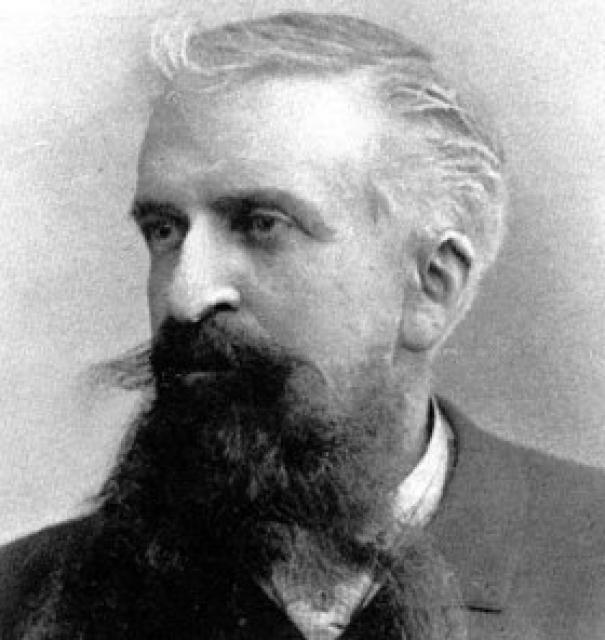
Gustave Le Bon
 France
Biography of Gustave Le Bon
Gustave Le Bon, a French psychologist, sociologist, and anthropologist, was born in 1841 in Nogent-le-Rotrou, France. He came from a family of Breton and Burgundian descent, although they belonged to the middle class and were not particularly wealthy. Little is known about Le Bon's childhood, but it is known that he studied medicine at the University of Paris after graduating from a classical lyceum. He continued his studies in Europe, Asia, and North Africa during the 1860s to 1880s. It was during this time that Le Bon began writing scientific articles that contributed to the field of medicine.
Although Le Bon held a doctorate, he never practiced medicine and instead focused on his scientific publications. In the early 1860s, he published a work on chronic diseases in people living in marshy areas. Later, he wrote an article on fever caused by body intoxication, which was supplemented with additional works on the same topic. Le Bon's interests extended beyond medicine to include archaeology, anthropology, and sociology. In 1866, he published a book on the concept and definition of human death, although it only gained significant interest a century later. During the same period, Le Bon wrote about the reproduction of species in humans and animals, which went on to have numerous reprints.
In 1870-1871, Le Bon volunteered as a military doctor during the war, which provided him with material for studying human behavior in extreme conditions. After the 1870s, he actively delved into the field of psychology and was the first to propose that "psychology is a science necessary for studying sociology and understanding the history of nations."
Le Bon gained recognition in the mid-1890s with the publication of his book "The Psychology of Peoples." This detailed analysis of the psychology of mass behavior shed light on individual motivations and the causes of historical events. The book sparked widespread discussion, leading Le Bon to write numerous other works on similar topics, including "The Crowd: A Study of the Popular Mind," "The Psychology of Socialism," and "The Evolution of Matter." It has been argued that his book "The Crowd" influenced fascist theories of leadership, serving as a kind of manual for Adolf Hitler, who referenced it in his infamous book "Mein Kampf." Benito Mussolini also considered it a significant influence. Unfortunately, Le Bon's methods of influencing crowds were skillfully employed by dictators who carefully studied his work, and the impact of his thoughts and research can be seen in historical events.
Le Bon's books were studied by Russian political activist Plekhanov, French philosopher Georges Eugène Sorel, Mussolini, Hitler, politician Gabriel Hanotaux, and even Sigmund Freud.
Gustave Le Bon passed away on December 13, 1931, in Marnes-la-Coquette, a suburb of Paris, at the age of 90.


