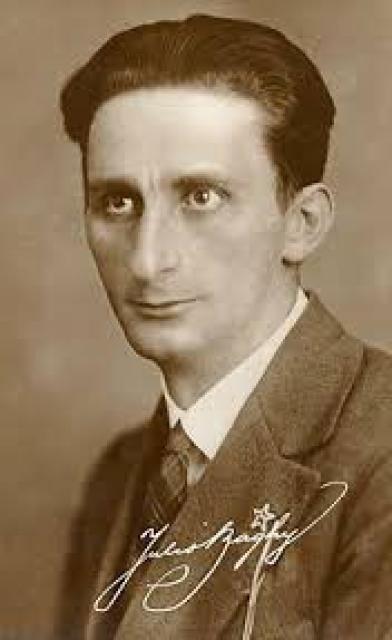
Gyula Baghy
 Hungary
- Introduction: Gyula Baghy, the Eminent Esperanto Author
- Early Life and Theater Career
- Esperanto Activism and Wartime Experiences
- Post-War Leadership in the Esperanto Movement
- Literary Legacy: Poetry and Prose
- Popularity and Affection within the Esperanto Community
- Contributions to Esperanto Education and Culture
- Legacy and Influence
Introduction: Gyula Baghy, the Eminent Esperanto Author
Gyula Baghy was a prominent Hungarian Esperantist, known for his exceptional literary contributions as a poet and prose writer in the Esperanto language. Born on January 13, 1891, in the city of Szeged, he hailed from a theatrical family where his father was an actor and his mother a theater prompter.
Early Life and Theater Career
After completing his education, Baghy followed in his parents' footsteps, working as an actor and director before the outbreak of World War I. He first encountered Esperanto in 1911, which significantly shaped his life path.
Esperanto Activism and Wartime Experiences
During World War I, Baghy's acting career was interrupted. He spent six years (1915-1920) in Siberian prisoner of war camps, where he remained active in the Esperanto movement. He organized Esperanto courses and maintained international correspondence, experiences that he later incorporated into his literary works.
Post-War Leadership in the Esperanto Movement
Upon his return to Hungary, Baghy dedicated himself to the international Esperanto movement. He organized courses, held leadership positions in various organizations, contributed to literary magazines, and served as a co-editor of the influential Esperanto journal "Literatura mondo."
Literary Legacy: Poetry and Prose
Despite his active organizational work, Baghy's most enduring legacy lies in his literary contributions. His works are characterized by idealism and humanism, guided by the belief that "Love creates peace, peace preserves humanity, and humanity is the highest ideal." His writing also demonstrates insightful satire and thoughtful philosophical perspectives.
Popularity and Affection within the Esperanto Community
Baghy's writings resonated with Esperanto enthusiasts, earning him widespread recognition and affection. Known affectionately as "Pa?jo" (meaning "Papa" in Esperanto), he became a symbol of the movement's values and aspirations.
Contributions to Esperanto Education and Culture
Baghy authored numerous poetry collections, novels, Esperanto textbooks, and theatrical works. His educational novel "La verda koro" (The Green Heart) remains a popular Esperanto textbook, embodying the spirit of the language and humanist values.
Legacy and Influence
Baghy's writing style was notable for its simplicity and clarity. He advocated for a "simple" Esperanto, advocating against the introduction of unnecessary neologisms. His influence extended beyond his own works, inspiring the establishment of Esperanto Book Day on December 15, the birthday of Esperanto creator L.L. Zamenhof.


