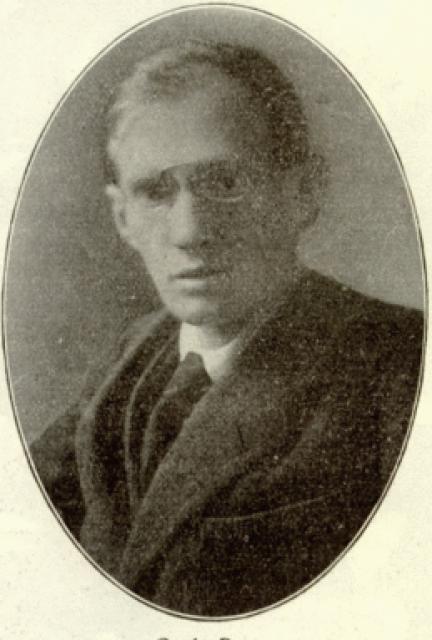
Gyula Breyer
 Hungary
- Gyula Breyer: Hungarian Hypermodernist
- Early Career
- International Success
- Innovative Play
- Blindfold Simultan
- Debut Systems
- Legacy
Gyula Breyer: Hungarian Hypermodernist
Gyula Breyer was a prominent Hungarian chess player, theorist, and journalist. A leading proponent of hypermodernism, he played in numerous tournaments and achieved notable results.
Early Career
Breyer's passion for chess began during his student years. At the age of 18, he participated in the Cologne International Tournament, finishing 6th. A year later, he competed in the Hungarian Championship. From 1915 to 1917, Breyer emerged victorious in four consecutive Hungarian Master Tournaments in Budapest.
International Success
Breyer's international tournament results were equally impressive. He placed 4th in Baden (1914) and 4th-6th in Mannheim (1914). In 1918, he shared 3rd-4th place in the Košice Memorial Tournament honoring Rudolf Charousek. His greatest triumph came in 1920 at the Berlin Tournament, where he finished first ahead of several renowned grandmasters.
Innovative Play
Breyer's unique chess style featured original strategic and tactical ideas that were highly valued by his contemporaries. He challenged the established principles of classical chess proponents like Siegbert Tarrasch, demonstrating his prowess as a chess innovator and artist.
Blindfold Simultan
Breyer was also a skilled blindfold player. In 1921, he played against a record-breaking 25 opponents in Košice, winning 15, drawing 7, and losing only 3.
Debut Systems
Breyer developed several original debut systems, including those in the Ruy Lopez and King's Gambit (known as Breyer's Gambit). His famous game against Tarrasch in Mannheim (1914) is a testament to his creative approach and determination to seize the initiative.
Legacy
Breyer's chess legacy extends beyond his tournament achievements. His innovative ideas and writings contributed to the development of chess theory and strategy. He passed away suddenly from a heart attack, leaving behind a lasting mark on the world of chess.