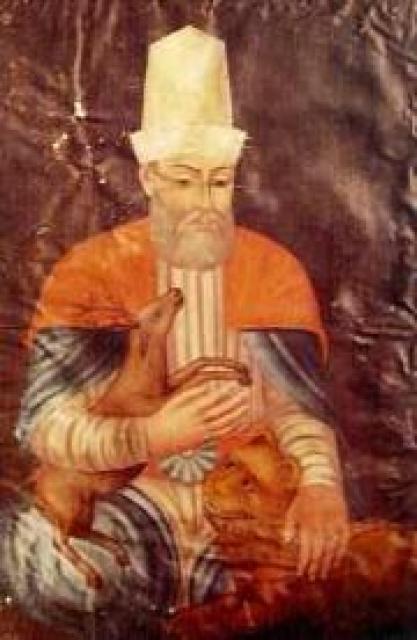
Hadzhi Bektashi
 Turkmenistan
- Early Life and Education
- Travels and Establishment of the Bektashi Order
- Mystical Teachings
- The Battle of Good and Evil
- Connection with the Janissaries
Early Life and Education
Hajji Bektashi, a Persian Sufi from Khorasan, was born in the city of Nishapur. He spent his childhood and adolescence in Khorasan, where he studied philosophy, social sciences, and natural sciences under the tutelage of the renowned Islamic scholar, Ahmed Yesevi.
Travels and Establishment of the Bektashi Order
After embarking on a pilgrimage to Mecca, Hajji Bektashi traveled extensively throughout Iran, Iraq, and Saudi Arabia. He eventually arrived in Anatolia and settled in the village of Sulucakarahoyuk, which was later renamed after him as Hajjibektas.
Mystical Teachings
Hajji Bektashi authored several works on Sufism (mysticism), including his most famous and influential treatise, titled "Makalat." According to his teachings, there are four stages of spiritual progress towards God:
- Shari'ah (Law): The ability to discern right from wrong based on the teachings of the Quran.
- Tariqah (Path): The way of dervishes who engage in prayer and devotion to God, seeking salvation in the afterlife.
- Ma'rifat (Gnosis): The enlightened mystics who are pure and purifying, believing in God, seeking the divine, and observing God's commandments.
- Haqiqat (Reality): The highest rank of spiritual seekers, who are characterized by humility, obedience, love for God, and constant remembrance of Him.
These four stages constitute the "Dört Kapı" (Four Doors), through which a seeker can ascend to spiritual heights by fulfilling ten obligations in each stage (a total of forty).
The Battle of Good and Evil
Hajji Bektashi believed that humans are constantly engaged in a struggle between their angelic and demonic impulses. The king of the angelic side is wisdom, led by faith, and supported by virtue and other positive qualities. The king of the demonic side is the devil, aided by human flaws such as pride, envy, and greed.
Hajji Bektashi condemned religious hypocrisy and urged his followers to be consistent in their beliefs and actions. He reminded them of the constant presence of angels and God's judgment upon them.
Connection with the Janissaries
The Janissaries, an elite military corps in the Ottoman Empire, regarded Hajji Bektashi as their patron saint. Ottoman rulers and military leaders built structures and fountains in Hajji Bektashi's monastery and made donations to the Bektashi order. The Janissaries were known as the "Sons of Hajji Bektashi," and many were members of the order. The head of the order was often appointed as the chief of the Janissaries.


