Haj Amin Husseini
 Israel
Biography of Haj Amin al-Husseini
Haj Amin al-Husseini was born in Jerusalem in 1895. He studied at Al-Azhar University in Cairo for two years before dropping out and serving as a cadet in the Turkish army. During this time, he collaborated with British intelligence. Believing that Arab liberation would come through British rule, he worked as an advisor to the British administration in Sudan.

However, he soon grew disillusioned with British policy after the issuance of the Balfour Declaration and the Sykes-Picot Agreement. He began inciting Arabs against Jews on the streets of Jerusalem, leading to the first bloodshed in the struggle for Jerusalem. Faced with a 10-year prison sentence, he fled to Transjordan, where he later became the Grand Mufti of Jerusalem.
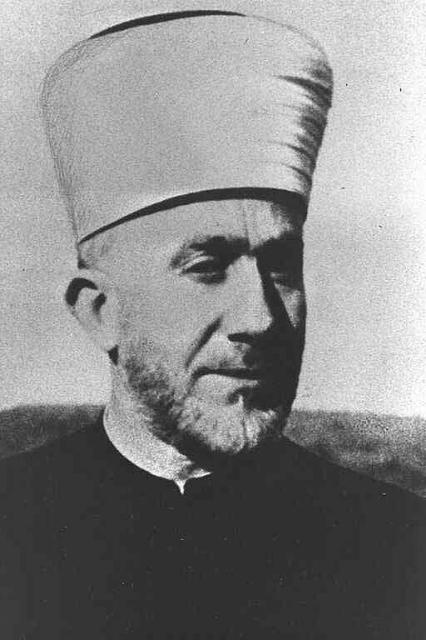
As the Grand Mufti, he consolidated his power, gaining control over Muslim institutions and organizations. He used his influence to recruit Arab supporters and incite violence against Jews. Under his leadership, riots broke out in 1920 and 1929, resulting in the deaths of many Jews.
In 1936, he formed the Arab Higher Committee and declared a general strike, demanding an end to Jewish immigration and land transfers to Jews. This strike quickly turned into an armed rebellion against British rule and rival Arab clans. His actions led to the deaths of hundreds of people, including Arabs who were seen as enemies.
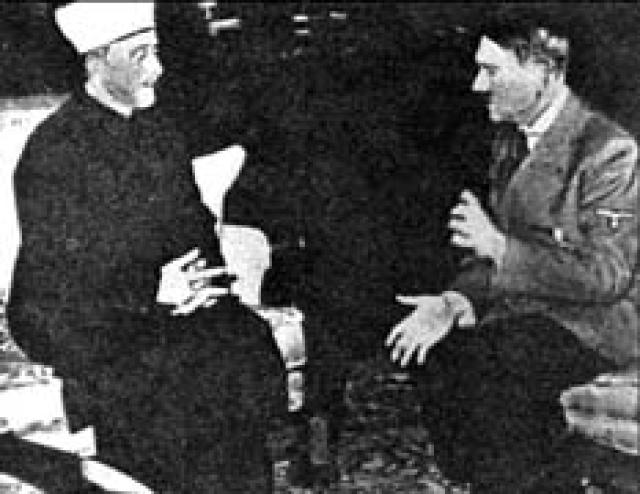
During World War II, al-Husseini collaborated with the Nazis, seeking their support in removing Jews from Palestine and driving out the British. He met with Adolf Hitler in 1941 and actively recruited Muslims to join the SS and carry out acts of sabotage against the British.
After the war, al-Husseini was briefly imprisoned in France but managed to escape punishment due to political considerations. He returned to Palestine and continued to incite violence against Jews. When the United Nations voted in favor of the partition plan for Palestine in 1947, he ordered the start of the Arab rebellion against the plan.
Al-Husseini's influence waned in the following years, but his impact on the Palestinian national movement cannot be underestimated. He played a significant role in shaping the anti-Zionist sentiment among Palestinians and promoting Arab nationalism. He died in Beirut in 1974, leaving behind a legacy of hatred and violence.