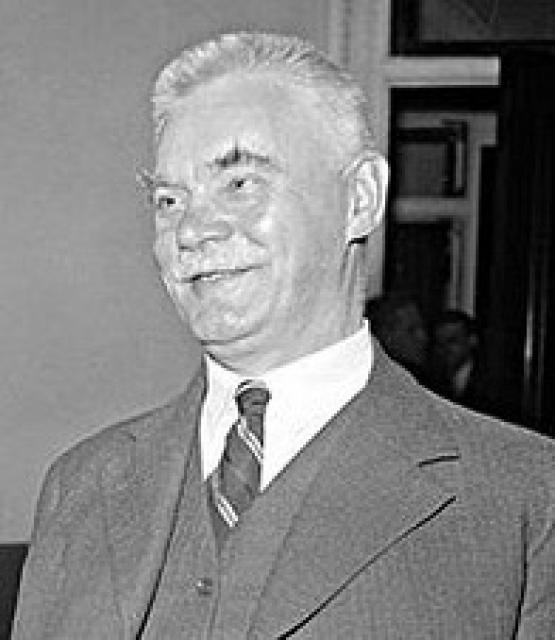
Halvdan Koht
 Norway
- Norwegian Historian, Biographer, and Political Figure
- Academic and Political Career
- Involvement in International Organizations
- Historical Contributions
- Language Advocacy and Other Roles
- Foreign Policy and the Occupation
- Later Years
Norwegian Historian, Biographer, and Political Figure
Early Life and EducationHalvdan Koht was born in 1873 in Trondenes, Norway. He studied history at the University of Kristiania (now Oslo), where he earned his doctorate in 1908.
Academic and Political Career
From 1910 to 1935, Koht held the position of Professor of History at the University of Kristiania. In his early years, he was a member of the liberal Venstre party. However, his views later shifted, and he joined the Norwegian Labour Party in 1911.
Involvement in International Organizations
Koht was actively involved in international organizations. From 1918 to 1936, he served on the Norwegian Nobel Committee, which awards the Nobel Peace Prize. He was also a member of the International Institute of Peace from 1913 onwards.
Historical Contributions
Koht made significant contributions to Norwegian historiography. He chaired the Norwegian Historical Society from 1912 to 1927 and again from 1932 to 1936. As President of the International Committee of Historical Sciences from 1926 to 1933, he promoted the use of Marxist methodology in historical analysis.
Language Advocacy and Other Roles
Koht was a strong advocate for the revival of the Nynorsk language, which he considered a distinct Norwegian language. He led the organization "Noregs Mållag" from 1921 to 1925, which worked to promote the use of Nynorsk. Additionally, he served as President of the Norwegian Academy of Sciences from 1923 to 1939.
Foreign Policy and the Occupation
Koht served as Minister of Foreign Affairs in the Norwegian government from 1935 to 1940. His neutrality policy during that period has been criticized in retrospect, as it ultimately led to the German occupation of Norway in 1940. During the occupation, Koht remained in exile in the United Kingdom until the war's end.
Later Years
After the war, Koht withdrew from politics to focus on his academic work. He continued to write extensively on Norwegian history and international affairs until his death in 1965.